
Genie Garage Door Repair in Midway: A Homeowner’s Guide
Genie garage door repair in Midway usually comes down to one of three things: a remote that lost its Intellicode programming, a travel limit that drifted, or a door that’s out of balance and making the opener work harder than it should. Most of these fixes are straightforward if you know which Genie model you’re dealing with. If you’d rather skip the troubleshooting and get a specialist on-site, call (833) 589-9949 for a free estimate.
Why Genie’s Intellicode System Confuses So Many Homeowners in Midway
Genie’s Intellicode remotes don’t pair the same way as LiftMaster, and that difference causes hundreds of unnecessary service calls every year from homeowners following the wrong instructions. If you’ve ever stood in your driveway pressing a remote button and watching nothing happen, you already know the frustration.
Here’s what most people miss: Genie has used two distinct Intellicode systems over the years, and the programming steps are not interchangeable. Intellicode 1, found on models made before roughly 2011, uses a fixed-button sequence on the motor head. Intellicode 2, used on current production, relies on a different button-press pattern and sometimes a backlit “learn” button. In Midway, where homes range from late-1990s builds in the older sections to new construction near the eastern edges, we see both systems weekly.
The practical takeaway: before you order a replacement remote or call someone out, check the motor head label. It tells you the model number, the production date, and usually whether you need an Intellicode 1 or 2 remote. A GLT990 or GLT9902 remote, for example, works with Intellicode 2. Older models like the ACSCTG work with Intellicode 1. Pairing the wrong remote to the wrong system simply will not work, no matter how many times you press the button.
How to Identify Your Genie Opener Model (And Why It Matters for Parts in Midway)
The motor head label is the single most useful piece of information for any Genie repair in Midway. Genie stamps model numbers on a label attached to the motor housing, typically on the side or underside. You’ll see names like Chain Glide, SilentMax, PowerMax, Excelerator, and a four-character model code such as 3024, 4042, or 2024.
Why does this matter? Because Genie’s lineup is not one opener with different branding. The Chain Glide series uses a steel chain drive with a specific carriage assembly. The SilentMax and SilentMax Connect lines use a belt drive with different tension requirements. The Excelerator, now discontinued, used a fast-motor design with a unique screw-drive carriage that is not compatible with anything else.
If you order the wrong carriage or the wrong limit assembly online, you’ll waste a week and still have a broken door. We keep this in mind when we stock our trucks for Midway service calls. Homes near the older Rancho Del Paso area often have original Chain Glide units from the early 2000s. Newer developments have SilentMax units with battery backup and integrated LED lighting. Different machines, different failure patterns, different parts.
Common Genie Failure Points We See Across Midway
Every opener brand has its weak spots, and Genie is no exception. In our experience repairing Genie units throughout Midway, three issues account for the majority of calls we take.
Carriage and rail wear on chain and belt drives. The carriage is the plastic or metal sled that travels along the rail and pulls the door. On Chain Glide models, the carriage teeth wear down over years of use, especially if the chain tension was never adjusted. Symptoms include a grinding sound, jerky door movement, or the door stopping halfway. SilentMax belt drive models are gentler, but the belt stretches and the carriage bushings still wear out.
Logic board resets and capacitor failures. Genie openers have a logic board inside the motor head that handles remote signals, safety sensor input, and motor control. Midway’s summer heat can shorten capacitor life, and when the capacitor goes, the opener hums but won’t move. A logic board reset sometimes clears an unresponsive remote system, but if the board itself has failed, replacement is the only real fix.
Limit adjustment drift. Genie uses an electronic limit system on many models, and these limits can drift over time, especially after a power surge or a hard door impact. When limits drift, the door travels too far and reverses, or stops short of the floor. The fix requires accessing the motor head and resetting the travel limits, a procedure that is specific to the unit’s model and programming buttons.
Genie’s Warranty and What Actually Voids It
Genie’s warranty structure matters more than most Midway homeowners realize. Current Genie openers typically carry a limited warranty on the motor and a separate, shorter warranty on parts. Belt drives often carry a lifetime belt warranty to the original purchaser, but the fine print is where things get tricky.
What voids a Genie warranty? Unauthorized modification, using non-Genie replacement parts, and damage caused by an improperly balanced door. That last one is the big one. If your door springs are weak and the opener is straining to lift hundreds of extra pounds, Genie will deny a warranty claim because the opener was operating outside its intended load. In Midway, where temperature swings cause spring fatigue, we reinforce this constantly: a door balance problem is a doorway to a denied warranty claim.
What about DIY repairs? Genie’s warranty language generally permits routine maintenance and programming, but component replacement using aftermarket parts is a risk. If you replace a gear kit with a generic part and the motor burns out later, the manufacturer has grounds to deny the claim. We advise homeowners to keep OEM parts where possible, and to document service. It’s also worth noting that warranty coverage is for the original purchaser, so if you bought a Midway home with an existing opener, you probably have no active warranty on it at all.
When the Opener Isn’t the Problem: Door Balance and Genie Motor Strain
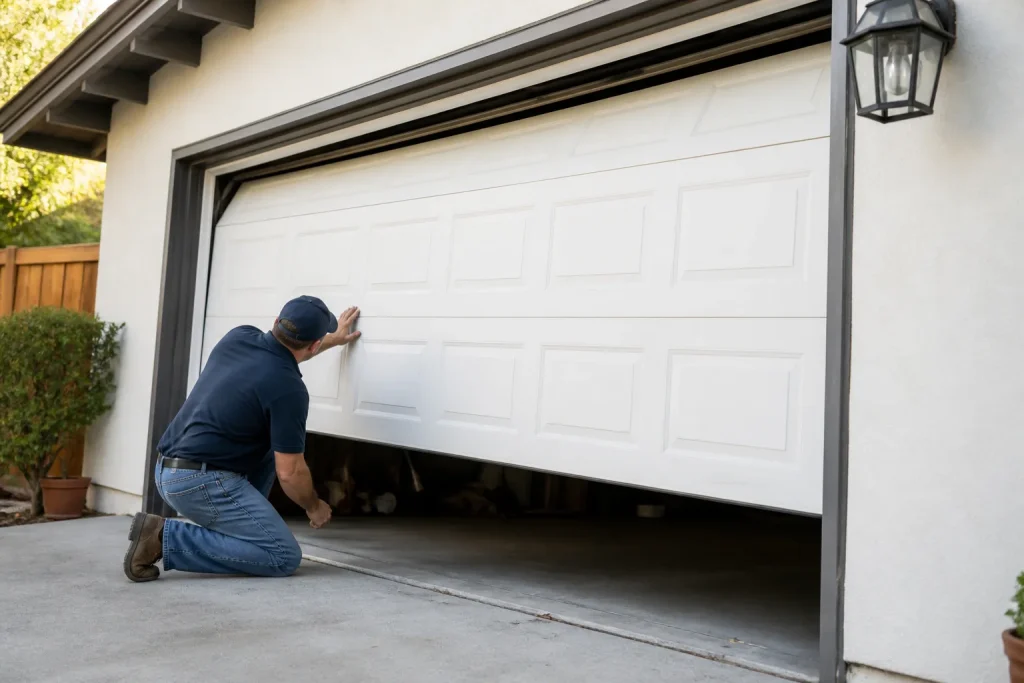
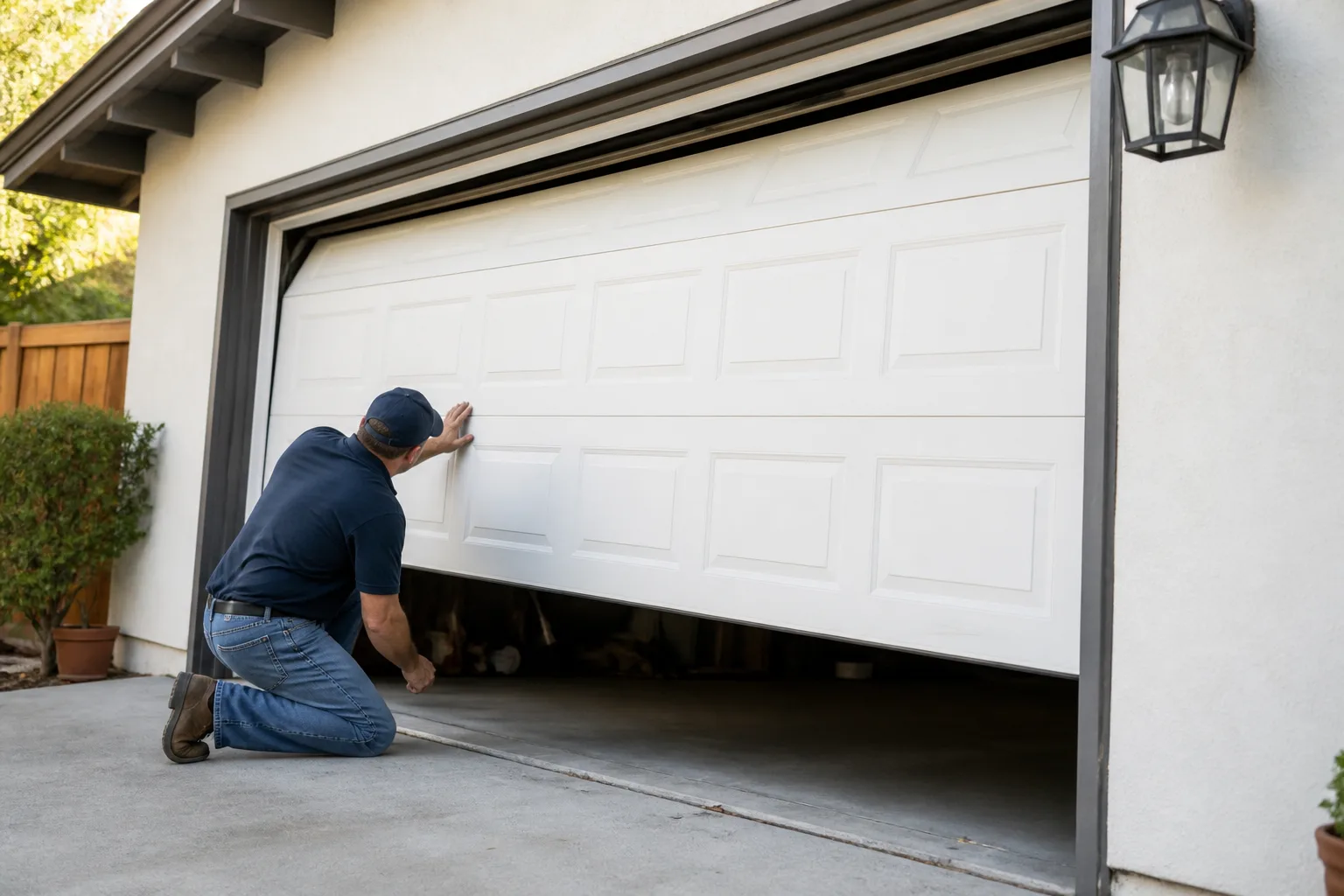
Here’s a scenario we see regularly in Midway: a homeowner calls about a Genie opener that’s sluggish, noisy, or tripping its force settings. They assume the opener is failing. We arrive, run the door manually after pulling the release, and find the door weighs far more than it should because one torsion spring snapped or a cable came off its drum.
The opener was never the problem. It was reacting to a mechanical failure in the door itself.
A properly balanced garage door should open with one hand when the opener is disengaged. If it doesn’t, the opener is compensating for something it was never designed to handle. This matters for two reasons. First, an overworked Genie motor wears out faster, burns through capacitors, and trips its safety circuit. Second, replacing the opener without fixing the balance simply transfers the problem to a new machine. In older Midway neighborhoods where original single springs are common, we recommend checking balance first before spending money on an opener replacement.
For a broader look at door repair issues across all brands, our Garage Door Repair in Midway page covers spring failures, panel damage, and track alignment in detail. And if you’re not sure whether to fix or replace, see our Garage Door Installation in Midway page for brand and style guidance.
Genie vs. Other Brands: What Midway Homeowners Should Know
Genie occupies an interesting spot in the opener market. It’s less expensive than most LiftMaster and Chamberlain units, which makes it popular with builders and budget-conscious homeowners. But the tradeoff is that Genie’s parts ecosystem is smaller, and some models use proprietary carriage and remote systems that don’t interchange with anything else.
We also work on Garage Door Opener Repair in Midway for LiftMaster, Chamberlain, Craftsman, and Raynor units, so we see these systems side by side. LiftMaster’s MyQ platform is more polished than Genie’s Aladdin Connect, but Genie’s Intellicode 2 is reliable once properly programmed. The real difference is in the details: limit adjustment procedures, remote pairing sequences, and replacement part availability all vary by brand.
If your door itself is the issue and you’re considering a panel or full door replacement, brands like Amarr and Wayne Dalton come up frequently. Amarr’s steel-backed insulated doors hold up well in Midway’s hot summers and cold winter mornings. Wayne Dalton’s offerings span both builder-grade and premium tiers, which makes them a common sight in both older and newer Midway developments. A Genie opener can work with any of these doors, but pairing an opener to a door that’s too heavy or unbalanced will cause problems regardless of brand.
Genie Remote and Keypad Programming: What Works and What Doesn’t
Reprogramming a Genie remote or wireless keypad in Midway is one of those tasks that sounds simple until you try it with the wrong instructions. The key differences between Intellicode 1 and Intellicode 2 determine everything about the button sequence.
On an Intellicode 2 unit, the learn button is usually a small, recessed button on the motor head, often labeled “Learn” or marked with a small LED. The typical sequence involves pressing and releasing the learn button, then pressing the remote button within 30 seconds. The LED will flash to confirm. Keypads require a PIN entry followed by the learn sequence, and some Intelli2 keypads need the remote’s code entered as part of setup.
Intellicode 1 systems use a different approach entirely. These older units often require setting DIP switches inside the remote to match the switches on the motor head, or use a unique pairing sequence that is not documented on current Genie support pages. If you have an Intellicode 1 system and the remote is dead, it’s usually simplest to install an external receiver kit rather than hunt for an obsolete remote.
We’ve pulled remotes out of garages in Midway’s older subdivisions where the homeowner had spent two weekends trying every YouTube tutorial they could find. The fix took ten minutes once we identified the opener as Intellicode 1. That’s the difference between generic troubleshooting and brand-specific service.
When to Call a Pro in Midway
Some Genie issues are genuinely DIY-friendly. Replacing a remote battery, reprogramming a keypad with correct instructions, and checking photo-eye alignment are all reasonable. But a few situations justify calling a specialist before you make things worse.
If your Genie opener is making a grinding noise, the carriage or gear assembly is likely worn, and continued use can damage the rail. If the opener hums but won’t move, you’re dealing with either a capacitor failure or a seized motor, both of which require opening the motor head. And if the door is visibly sagging, slamming on the way down, or one cable is dangling loose, stop using the door immediately. Torsion springs under tension are not a DIY project. In Midway, where garages are heavily used year round, a door that fails hard is a safety issue as much as an inconvenience.
If your Genie opener is acting up, Wexford Garage Door Repair offers free estimates. We specialize exclusively in garage doors; it’s the only trade we practice. We work on your brand, and we’ll diagnose it correctly the first time. Call (833) 589-9949.
The Bottom Line
Genie openers are solid machines, but they have brand-specific quirks that generic repair advice misses. The Intellicode 1 vs. Intellicode 2 distinction alone accounts for a large share of troubleshooting failures. Add in carriage wear patterns, limit drift, and the warranty implications of an unbalanced door, and you have a system that rewards specificity.
Key takeaways: identify your Genie model from the motor head label before ordering parts. Reprogram remotes according to the correct Intellicode generation. Check door balance before blaming the opener. And if you’re unsure, call a specialist rather than risk a warranty claim or a bigger repair bill.
If you’re in Midway and need help with a Genie or any other garage door opener, Wexford Garage Door Repair offers free estimates. Call (833) 589-9949 and we’ll get your door working. For an overview of everything we do, see the Wexford Garage Door Repair home page.
Frequently Asked Questions
Genie garage door repair in Midway typically runs from $95 to $320 depending on the issue. A remote reprogramming or limit adjustment sits at the low end. A carriage replacement or logic board swap lands higher. The exact price is quoted and agreed before any work starts. Call (833) 589-9949 for a free estimate on your specific Genie model.
In most cases, yes. We carry common Genie parts on our trucks, including carriages for Chain Glide and SilentMax units, remotes for both Intellicode systems, and capacitors. If a specialized board is needed, we source it and schedule the return visit. Call (833) 589-9949 and we’ll tell you honestly whether it’s a same-day fix.
Intermittent Genie remote failure is usually caused by one of three things: a weak battery, signal interference from LED bulbs or nearby devices, or drift in the Intellicode programming. Start by replacing the remote battery. If the problem persists, reprogram the remote to the correct Intellicode generation. If it still fails, the logic board receiver may be weakening.
We carry the most common Genie components, including remotes for Intellicode 1 and 2, keypads, carriages, safety sensors, and capacitors. Less common parts, like specific logic boards for older models, may require a short-order wait. We’ll confirm availability when you call (833) 589-9949, and the price is agreed before any work begins.
Written by the team at Wexford Garage Door Repair, serving Midway since 2017.
Need Garage Door Help?
Call Wexford Garage Door Repair - licensed & insured, here with fast help in Midway.
(833) 589-9949