
Last updated November 2, 2026
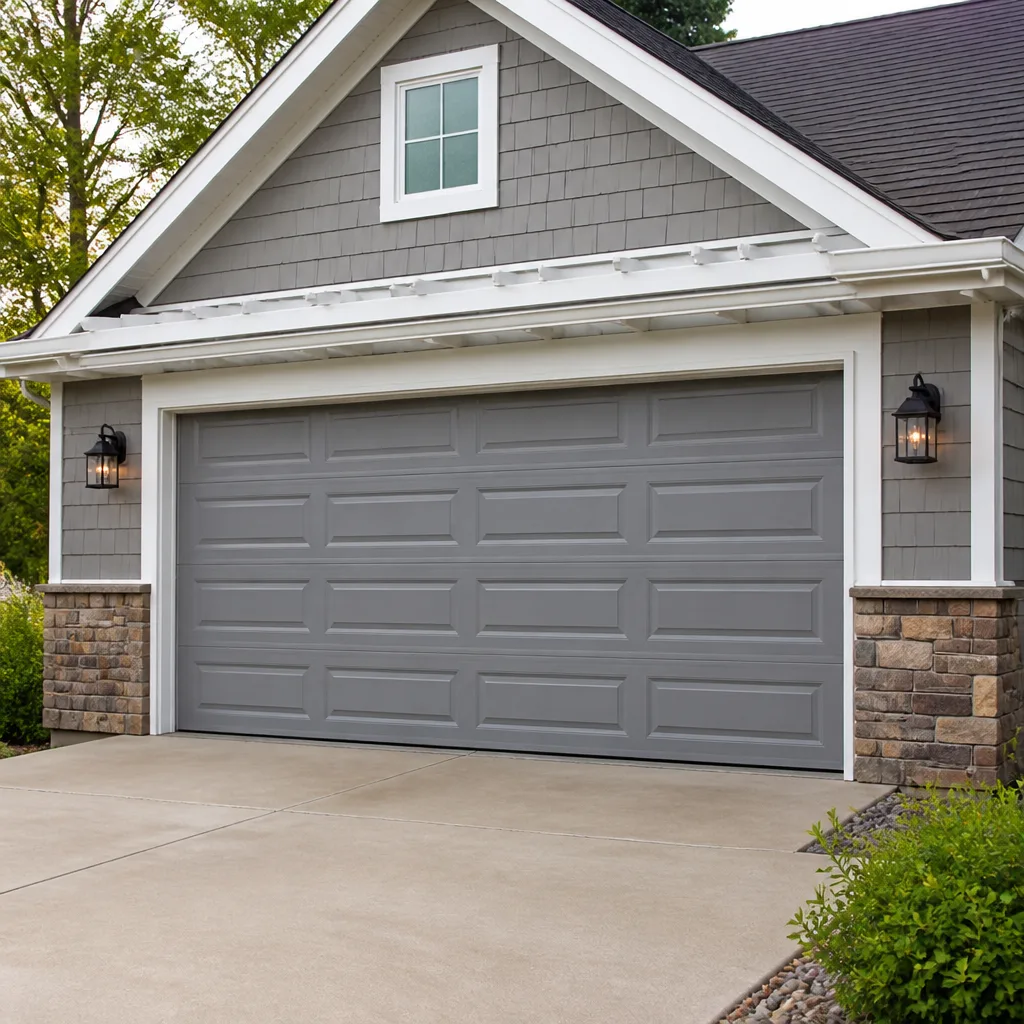 Raised-panel steel
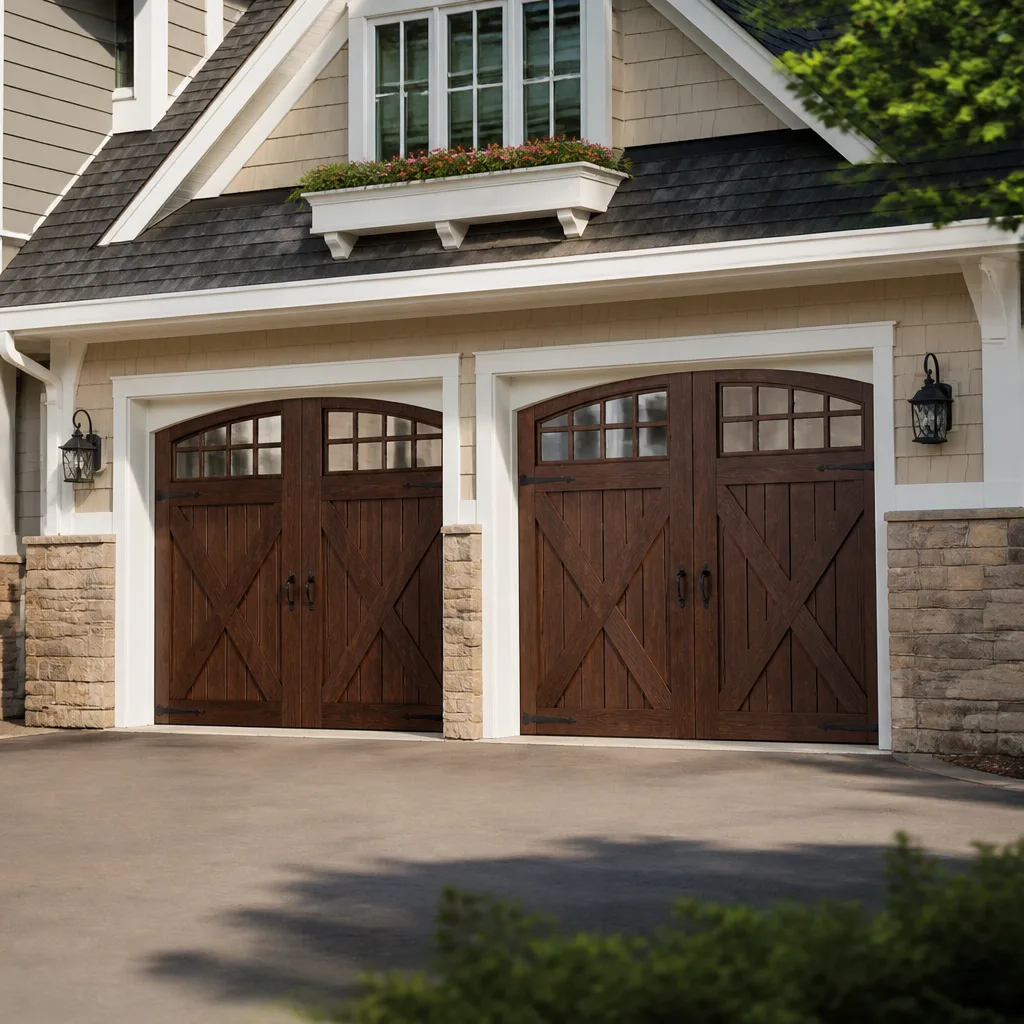 Carriage house
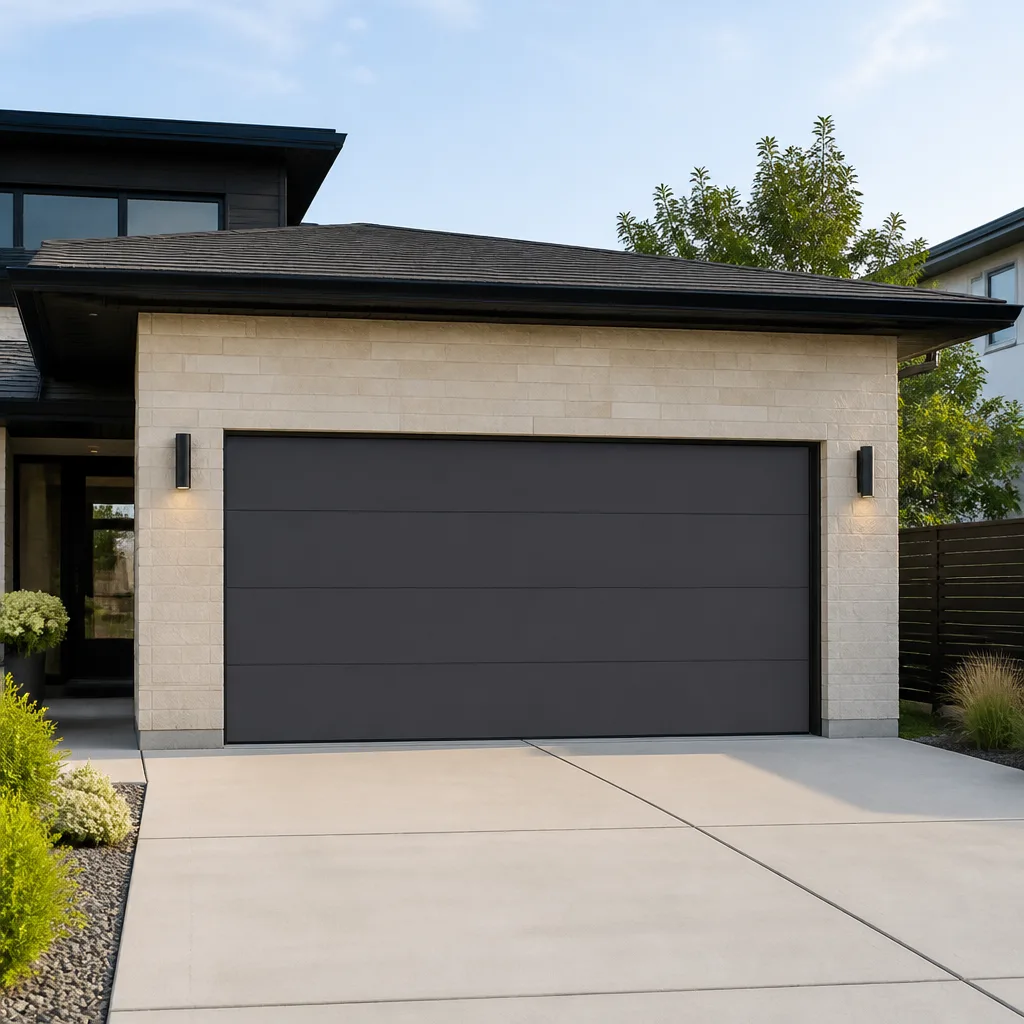 Modern flush
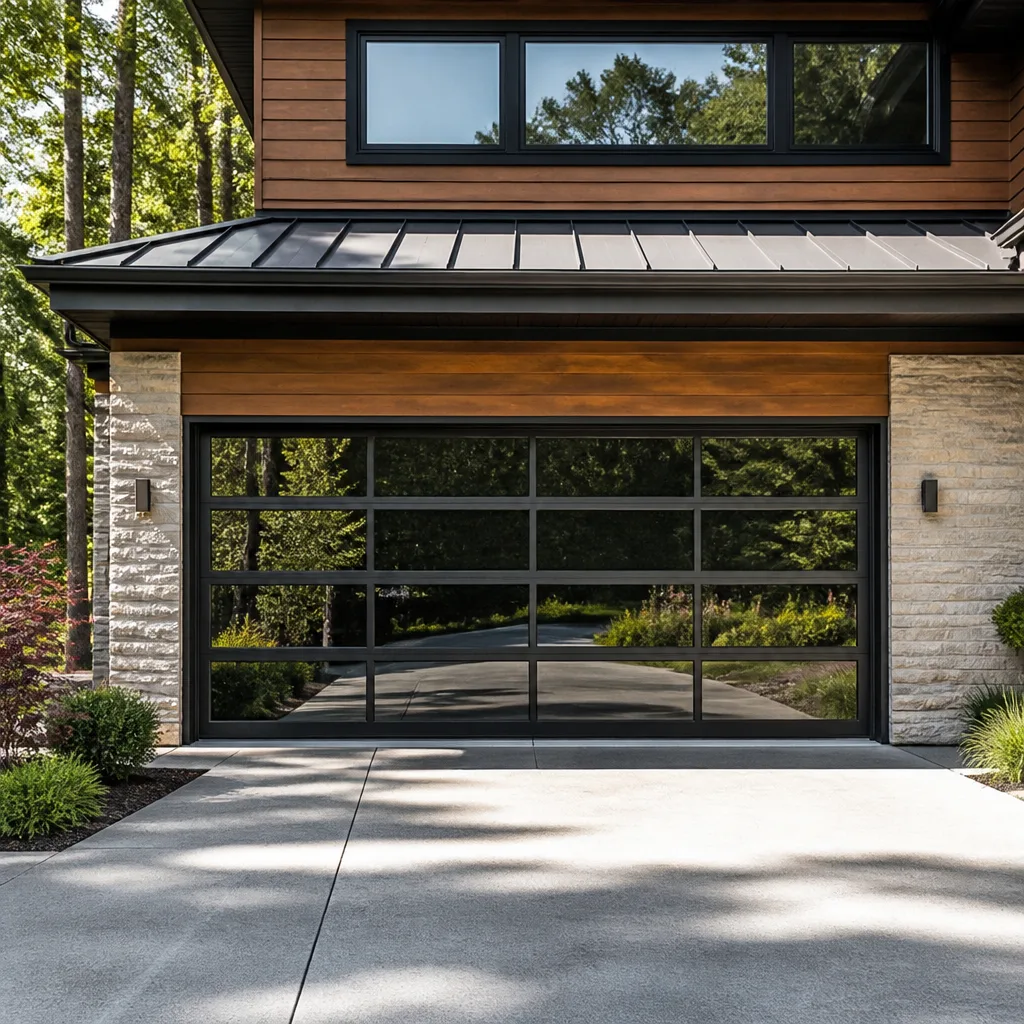 Full-view glass
 LiftMaster openers
 Chamberlain openers
Full 25-point door and opener safety check with every visit - springs, cables, rollers, tracks, and your LiftMaster or Chamberlain opener included
You get a price before we start. It does not change when the truck arrives.
Get your free estimateChoosing the Right Garage Door Brand: A Buyer’s Guide for Midway
Clopay and Amarr doors can sit side by side in a showroom and look nearly identical, yet differ by a full steel gauge in their skin thickness. That single difference determines whether a stray basketball or a hot Midway afternoon leaves a permanent dent or just a smudge you wipe off. Most homeowners pick a garage door the way they pick paint color: by how it looks in the moment. We’re going to show you why that’s backwards. By the end of this guide, you’ll know which brands hold up under Midway’s UV exposure, which insulation ratings actually matter for an attached garage, and how to avoid getting locked into proprietary hardware that costs you double down the road.
Styles & brands we work with
- Raised-panel steel
- Carriage house
- Modern flush
- Full-view glass
- LiftMaster openers
- Chamberlain openers
Quick Answer
The best garage door brand for a Midway home depends on what you’re optimizing for: Clopay offers the thickest steel at mid-tier prices, Amarr leads on warranty terms and thermal performance, and Wayne Dalton provides solid builder-grade value if you’re replacing on a budget. For most Midway homeowners, a polyurethane-insulated door with a minimum 25-gauge steel skin from Clopay or Amarr delivers the best balance of dent resistance, heat rejection, and long-term warranty coverage.
Table of Contents
- What Steel Gauge Actually Means for Your Midway Garage Door
- Insulation Ratings by Brand: Polystyrene vs. Polyurethane in Midway’s Climate
- Warranty Structures Compared: Clopay vs. Amarr vs. Wayne Dalton
- Proprietary Hardware vs. Standard Parts: Which Brands Lock You In
- Matching Your Door Brand to Opener Compatibility
- Brand Recommendations by Budget Tier
- Midway-Specific Considerations: Climate, Code, and Market Realities
- Common Mistakes to Avoid When Choosing a Garage Door Brand
- When to Call a Professional
- Frequently Asked Questions
- The Bottom Line
What Steel Gauge Actually Means for Your Midway Garage Door
Steel gauge is the single most misunderstood spec in garage door shopping. Lower gauge numbers mean thicker steel. Most residential doors use 24, 25, or 26 gauge steel, with some budget models dropping to 27 or 28. Here’s the part most guides skip: the difference between a 24-gauge and a 26-gauge skin is roughly 0.008 inches, which sounds negligible until you realize it translates to a door that’s nearly 30% more resistant to denting.
In Midway, this matters more than in coastal California cities. Our summer UV exposure breaks down thinner paint finishes faster, which means the steel underneath has less protection exactly when it’s most vulnerable. A thin-gauge door with a baked-on finish will look fine for the first three years, then start showing oxidation at the panel edges. We’ve seen it on homes throughout the area, particularly on west-facing garage doors that take direct afternoon sun.
Steel Gauge by Brand and Tier
- Clopay: Entry-level lines (Gallery, Classic) typically use 27-gauge steel. Their mid-tier (Premium, Coachman) steps up to 25 or 24 gauge depending on the series. Their top architectural lines run 24 gauge as standard.
- Amarr: Builder-grade (Lincoln, Stratford) uses 26 or 27 gauge. Mid-tier (Heritage, Classica) moves to 25 gauge. Premium (Olympus, Hillcrest) runs 24 gauge with some models offering 22-gauge reinforcement plates.
- Wayne Dalton: Classic Steel and 9100 series use 26 or 27 gauge on budget models, but their 8000 and 9000 series step up to 25 gauge. Their fiberglass and aluminum lines (7800) use a different material entirely.
- Craftsman: Most Craftsman doors are rebranded Wayne Dalton or Clopay models, so gauge follows whichever manufacturer produced that specific line.
- Raynor: Even their entry-level doors typically start at 25 gauge. Their premium lines (Aspen, Showcase) use 24 gauge plus composite reinforcement.
Here’s the practical takeaway for Midway homeowners: if your garage faces south or west and takes direct sun, a 26-gauge door will show finish degradation noticeably sooner than a 25-gauge door from the same brand. The cost difference between the two is usually $150 to $300 on a standard 16-foot door. Over a 15-year lifespan, that’s roughly $20 per year for visibly better dent resistance and finish retention.
Insulation Ratings by Brand: Polystyrene vs. Polyurethane in Midway’s Climate
R-value measures thermal resistance. A higher R-value means the door blocks more heat transfer. For attached garages in Midway, where summer temperatures routinely push into the 90s, the difference between an R-6 and an R-18 door is the difference between a garage that’s merely warm and one that’s an oven radiating heat into whatever room sits above or beside it.
There are two insulation types used in residential garage doors, and they perform differently:
- Polystyrene: Rigid foam panels cut to fit between the steel skins. Typical R-value: 6 to 9. This is what you get on most builder-grade and mid-tier doors. The panels don’t fill the cavity completely, leaving air gaps that reduce actual thermal performance below the rated number.
- Polyurethane: Sprayed or injected foam that expands to fill every gap between the steel skins, bonding them together. Typical R-value: 12 to 18. The foam also makes the door structurally stiffer and quieter to operate.
Brand-by-Brand Insulation Comparison
- Clopay: Their Intellicore line is polyurethane with R-values up to 18.4, and it’s one of the best-performing insulation systems on the residential market. Standard polystyrene models run R-6 to R-9.
- Amarr: Their ThermaShield polyurethane option is standard on premium lines, reaching R-15 to R-16. Polystyrene options run R-6 to R-10 depending on door thickness.
- Wayne Dalton: Their ThermoMark polyurethane doors hit R-12 to R-14 on the 9000 series. Polystyrene models run R-6 to R-8.
- Raynor: Polyurethane is standard on most Raynor lines, with R-values from R-12 up to R-18 on their top tier.
For a Midway home with an attached garage, we recommend a minimum R-12 polyurethane door if the garage shares a wall with living space. If your garage is attached but has a bedroom or living room above it, step up to R-14 or higher. The incremental cost is $200 to $500 depending on brand and size, but the reduction in heat load on your home’s air conditioning system pays for that within two to three summer seasons.
Warranty Structures Compared: Clopay vs. Amarr vs. Wayne Dalton
Warranty language is where garage door manufacturers hide their real confidence in their product. A lifetime warranty means nothing if the fine print prorates the coverage so aggressively that a year-seven warranty claim pays out 20% of the door’s cost. Here’s what we see when customers file actual claims.
Clopay Warranty Structure
Clopay offers a Limited Lifetime Warranty on their steel and aluminum residential doors. The lifetime portion covers the door sections against rust-through and delamination. The finish (paint or coating) carries a shorter warranty, typically 1 to 3 years depending on the line, and that’s where most claims get denied. Clopay’s hardware carries a 1-year warranty on most lines, with premium series extending to 3 years. The important detail: Clopay’s warranty is transferable to a second owner, though the terms shorten after transfer.
Amarr Warranty Structure
Amarr’s structure is more complex. Their Limited Lifetime Warranty covers the Steel Door Sections on Classica, Heritage, and Olympus lines for as long as you own the home. However, the warranty is pro-rated on a descending schedule after the first 10 years, meaning a year-12 claim pays less than a year-5 claim. Amarr’s finish warranty ranges from 1 to 5 years depending on the door line, which is the best in the industry for premium lines. Hardware warranty: 1 year standard, 3 years on premium.
Wayne Dalton Warranty Structure
Wayne Dalton’s warranty is heavily segmented by product line. Their 9000 series carries a Lifetime Limited Warranty on the door sections, while their budget 8000 and Classic Steel lines carry 1-year to 5-year coverage on sections and a 1-year finish warranty. This is the most common warranty gap we see in Midway: homeowners buy a builder-grade Wayne Dalton when the home is constructed, the finish fails after a few hot summers, and the warranty has already expired.
What Gets Excluded Most Often
- Finish fading and chalking: Every manufacturer excludes UV-related cosmetic degradation on nearly all lines. In Midway’s sun exposure, this is the single most common reason a door “fails” cosmetically without triggering warranty coverage.
- Dents from impact: Warranty covers rust-through, not physical damage. A dented panel from a car bumper or a rock thrown by a mower is an insurance or out-of-pocket repair.
- Improper installation: All three manufacturers exclude damage caused by installation errors. This is why we emphasize brand-specific installation knowledge at Garage Door Installation in Midway; a door installed with even slight track misalignment wears hardware faster and gives the manufacturer a warranty-out.
- Spring failures: Springs are consumable parts. Most brands cover torsion and extension springs for 1 year unless the door line specifies a longer spring warranty. Cycles, not years, determine spring life – a typical spring rated for 10,000 cycles lasts about 7 years for a door opened 4 times daily.
Proprietary Hardware vs. Standard Parts: Which Brands Lock You In
This is the section most guides don’t cover, and it’s where brand choice has long-term financial consequences. Some manufacturers design their hinges, rollers, and brackets to work exclusively with their own replacement parts. Others build to industry-standard dimensions that accept aftermarket components from multiple suppliers.
Why does this matter for a Midway homeowner? Because when a hinge wears out or a roller seizes seven years after installation, a proprietary system means you’re paying manufacturer list price for the part and potentially waiting days for it to ship. A standard system means we can pull a replacement from the truck and finish the garage door repair in Midway the same day.
Brand Proprietary Systems
- Wayne Dalton: Several of their budget lines (TorqueMaster, certain Classic Steel models) use a proprietary torsion spring system that requires Wayne Dalton-specific tools to service. The springs are housed inside a tube rather than exposed on a shaft, which looks cleaner but means a standard torsion spring replacement won’t fit. Expect to pay 25-40% more for Wayne Dalton proprietary spring service compared to standard torsion systems.
- Amarr: Generally uses standard hardware dimensions on most lines. Their hinges and rollers follow industry-standard mounting patterns, meaning aftermarket parts largely fit.
- Clopay: Uses standard hardware on their Gallery and Classic lines. Their premium lines use heavier-gauge custom brackets but the mounting dimensions remain standard, so replacement parts don’t have to come from Clopay.
- Raynor: Uses standard torsion systems and hardware on all current production lines. Their older doors (pre-2005) sometimes had proprietary roller mounts, so if you have a Raynor from the late 1990s, verify hardware compatibility before any repair.
The rule of thumb: avoid proprietary hardware unless the door line offers a compelling reason to accept it. In Midway, we see plenty of Wayne Dalton TorqueMaster doors from the 2000s housing boom, and homeowners are consistently surprised when spring replacement costs more than on a comparable Clopay or Amarr door.
Matching Your Door Brand to Opener Compatibility
A garage door and a garage door opener are independent systems that have to work together. Some combinations are plug-and-play; others require adapter brackets, special arms, or entirely different opener models. Getting this wrong means a garage door opener repair in Midway that’s really an installation mistake rather than a product failure.
Compatibility by Door Type
- Standard sectional doors (all brands): Work with any modern opener from LiftMaster, Chamberlain, or Genie. The opener connects to the door’s top panel via a J-arm, and the geometry is universally compatible.
- Insulated heavyweight doors (Clopay Intellicore, Amarr ThermaShield, Raynor polyurethane): These doors are heavier than standard steel doors. A 16-foot polyurethane door can weigh 200-300 pounds, which exceeds the lifting capacity of entry-level openers. Match with an opener rated for the door’s actual installed weight, typically a 1/2 horsepower or 3/4 horsepower belt or chain drive.
- Carriage house styles (Clopay Coachman, Amarr Classica): The decorative hardware and heavier overlays add weight. Same rule applies: verify opener capacity against installed door weight, not catalog door weight.
- Wayne Dalton proprietary systems: If your Wayne Dalton door has a TorqueMaster tube system, standard openers still work, but the connection point is slightly different. Installation requires a specific adapter plate on some models.
Smart Home Integration: LiftMaster myQ
LiftMaster and Chamberlain both use the myQ platform for smartphone control. If you want garage door control from your phone, the door itself doesn’t need to be smart; the opener does. Any brand of door works with a myQ-equipped LiftMaster or Chamberlain opener. However, older doors with manual locks or non-standard track configurations may need a simple adapter to mount the door sensor correctly. We install LiftMaster openers on Clopay, Amarr, Wayne Dalton, and Raynor doors regularly – the integration works across all of them.
One nuance worth knowing: if you have a Craftsman opener from the mid-2010s, many of those units are rebranded Chamberlain or LiftMaster models. Some older Craftsman units accept myQ retrofit kits, others don’t. If your Craftsman opener is more than 12 years old, replacement with a current LiftMaster model is usually more cost-effective than attempting a smart-home retrofit.
Brand Recommendations by Budget Tier
Here’s a practical breakdown of what you get at each price point, based on what we see installed in Midway homes across every construction era from 1960s ranch houses to new builds.
Under $800 Installed: Builder-Grade Replacement
- Top pick: Wayne Dalton 8000 or 9000 series. You get a basic steel door with polystyrene insulation and a 1-5 year warranty. Fine for a detached garage or a home you plan to sell within a few years. Expect finish degradation in Midway’s sun within 3-5 years.
- Alternative: Craftsman steel doors. These are typically rebranded Wayne Dalton or Clopay units. Comparable quality at a comparable price, but verify the actual manufacturer before buying so you know what hardware system you’re getting.
$800 – $1,500 Installed: Sweet Spot for Most Midway Homes
- Top pick: Clopay Premium series or Coachman. You get 25-gauge steel, polyurethane options, a transferable lifetime section warranty, and standard hardware that any future repair can source quickly. This is the tier where the price-to-performance curve peaks.
- Strong alternative: Amarr Heritage or Classica. Comparable steel gauge and insulation, slightly better finish warranty (up to 5 years on select lines), but watch the pro-rated section warranty after year 10.
$1,500 – $3,000+ Installed: Premium and Architectural
- Top pick: Clopay Intellicore lines with R-values up to 18.4. If your garage is attached and faces west, this is the door that actually changes your home’s cooling load.
- Strong alternative: Raynor Aspen or Showcase. 24-gauge steel as standard, polyurethane insulation, and hardware that’s built heavier than anything at the mid-tier. Raynor doors are less common in Midway than Clopay or Amarr, but their build quality at the premium tier is strong.
- Consider: Amarr Olympus or Hillcrest. Best-in-class finish warranty (5 years) and premium hardware. The pro-rated section warranty is the tradeoff.
We’ve installed and serviced every brand above, and the pattern is consistent: mid-tier Clopay and Amarr doors hold up best in Midway’s climate. The premium-tier doors justify their cost only when you’re specifically paying for insulation performance or architectural styling that a mid-tier door can’t match.
Midway-Specific Considerations: Climate, Code, and Market Realities
Midway sits inland enough that our garage doors face a different set of challenges than coastal California homes. Here’s what we’ve learned from years of servicing and installing doors across the area.
UV exposure is the silent killer. South- and west-facing doors in Midway take direct afternoon sun through the hottest months. Finish chalking, panel fading, and seal degradation all happen faster here than in fog-affected coastal microclimates. A door that looks 5 years old in San Francisco after 8 years can look 5 years old in Midway after 4. This is the strongest argument for stepping up from builder-grade steel to a mid-tier door with a thicker gauge and better finish system.
Heat transfer to living spaces is real. Many Midway homes have bedrooms or bonus rooms above the garage. An uninsulated or minimally insulated door becomes a radiant heat source in summer, adding load to your air conditioning system. We’ve measured garage temperatures in Midway exceeding 110°F on August afternoons. A polyurethane-insulated door with R-12 or better reduces that by 15-20 degrees, which translates directly to comfort and energy savings.
Permit requirements are minimal but specific. Most garage door replacements in Midway don’t require a building permit if you’re keeping the existing opening dimensions. However, if you’re widening the opening or changing the door from swing-out to sectional overhead, you’ll likely need plan review. Check with your local building department before committing to a door size. In our experience, most Midway homeowners never hit this issue because they’re replacing like-for-like, but it’s worth verifying before ordering custom-width doors.
Housing stock varies widely. Midway has a mix of 1960s and 1970s ranch homes with traditional 16-foot doors, plus newer 2000s-era construction with taller 18-foot doors or double-door configurations on some lots. The brand recommendation shifts with the door size: wider and taller doors amplify the weight problem, making polyurethane insulation and heavier hardware more important for smooth operation.
For a deeper look at what’s involved in this decision, our Wexford Garage Door Repair home page links to all our Midway-specific service guides.
Common Mistakes to Avoid When Choosing a Garage Door Brand
- Buying by showroom aesthetics alone. A Clopay and an Amarr door in the same color will look nearly identical in a catalog. The difference is in the steel gauge, insulation type, and warranty structure. Check those specs before you check the color swatches.
- Assuming a lifetime warranty means lifetime coverage. Every manufacturer’s “lifetime” warranty covers specific components (usually the steel sections against rust-through) for specific durations under specific conditions. Read the exclusions, particularly on finish coverage. In Midway’s UV environment, finish exclusions are the most common claim denial.
- Accepting proprietary hardware without understanding the cost. Wayne Dalton’s TorqueMaster system and some older proprietary designs mean future repairs cost more and take longer. If you’re buying a door with proprietary components, know that before you sign.
- Choosing insulation based on R-value alone. The construction type matters more than the number. A polyurethane door with R-12 outperforms a polystyrene door with R-9 in real-world conditions because the foam fills the cavity completely and eliminates air gaps.
- Skipping opener compatibility checks. A heavyweight insulated door needs an opener rated for its actual installed weight. An entry-level opener on a 300-pound door will burn out its motor within a few years and likely damage the door’s top panel in the process.
- Buying from a big-box store without a local installation partner. The door quality matters, but installation quality determines whether you’ll ever file a warranty claim. A poorly installed door from a top brand will fail faster than a properly installed mid-tier door. In Midway, wind loading and temperature swings punish installation shortcuts.
When to Call a Professional
Some parts of this decision you can handle on your own: comparing brands, checking warranty terms, measuring your existing opening. But there are points where professional input saves real money. If your existing door is more than 20 years old and you’re unsure whether the track system can support a heavier replacement door, call before you order. If you’re considering a door that changes the balance point because of added insulation weight, that’s a spring calculation that matters. If your current opener is original to the home and you’re not sure whether it’s compatible with your new door’s weight class, that’s a 15-minute evaluation that prevents a $400 opener repair later. Wexford Garage Door Repair offers free estimates in Midway, call (833) 589-9949, and we’ll evaluate your existing setup and give you a written price for the door and installation before any work begins.
Frequently Asked Questions
For most Midway homes, Clopay and Amarr are the strongest choices because they offer 25-gauge steel and polyurethane insulation at mid-tier prices, with warranty structures that hold up better in our UV-heavy climate than budget alternatives. Wayne Dalton is a reasonable budget option if you’re willing to accept shorter warranty coverage. Call (833) 589-9949 and we’ll match a specific brand and model to your home’s orientation and door size.
A mid-tier steel garage door installed in Midway typically runs $900 to $1,500 depending on size, insulation type, and hardware, while premium polyurethane-insulated doors run $1,800 to $3,000 or more for architectural styles. The final price depends on your opening dimensions, the brand you choose, and whether you need track replacement or can reuse existing rails. Estimates are free, call (833) 589-9949.
Clopay and Raynor doors with 24-gauge steel and polyurethane insulation consistently show the best long-term durability in our Midway service area, with many units still operating smoothly at 15 to 20 years when properly maintained. The key variable is finish quality in our UV environment, which favors Amarr on premium lines. We service all of these brands routinely at Garage Door Opener Repair in Midway and can tell you what specific models are aging best.
For an attached garage in Midway, polyurethane is worth the extra cost because it fills the entire cavity between steel skins, eliminates air gaps, and delivers R-values of 12 to 18 compared to 6 to 9 for polystyrene. The difference is noticeable in rooms above or beside the garage during our summer months. Call (833) 589-9949 for a specific comparison based on your door size and orientation.
Most modern openers from LiftMaster, Chamberlain, and Genie work with all major door brands, but the opener’s lifting capacity must match the installed weight of your door, and some Wayne Dalton doors require adapter plates for proper connection. A heavyweight polyurethane door needs a 1/2 HP or stronger opener, and getting this wrong leads to premature motor failure. We diagnose and correct these mismatches regularly. Call (833) 589-9949 for a compatibility check.
Most lifetime warranties cover only the steel door sections against rust-through and delamination, with finish coverage limited to 1 to 5 years depending on the brand and line, and hardware covered for 1 to 3 years. In Midway’s UV exposure, finish degradation is the most common issue we see, and it’s usually excluded from warranty coverage. Read the exclusions before buying, or call us and we’ll walk you through what each brand actually pays claims on.
Standard single-door installation in Midway takes 4 to 6 hours for a like-for-like replacement with existing tracks, and a full day when track replacement or double doors are involved. After your free measure and written quote, we schedule the installation at a time that works for you, and the price is locked before any work starts. Call (833) 589-9949 to schedule a measure.
The Bottom Line
Choosing a garage door brand in Midway comes down to three variables: steel gauge, insulation type, and warranty terms. A mid-tier Clopay or Amarr door with 25-gauge steel and polyurethane insulation is the right answer for the majority of Midway homes, balancing dent resistance, heat rejection, and long-term warranty coverage at a price that makes sense for a door you’ll live with for 15 years. Budget options save money upfront but get expensive in finish failures and hardware repairs within a few years. Figure out your budget tier, decide on insulation needs based on whether your garage is attached, and compare the warranty exclusions before you even look at a color swatch. That’s how you make a decision you won’t regret when the first Midway heat wave hits.
Ready to talk specifics about your door? Call Wexford Garage Door Repair at (833) 589-9949 for a free estimate. We’ll evaluate your existing setup, recommend brands that match your home’s construction and orientation, and give you a written price before any work begins.
Written by the team at Wexford Garage Door Repair, serving Midway since 2017.
See the difference
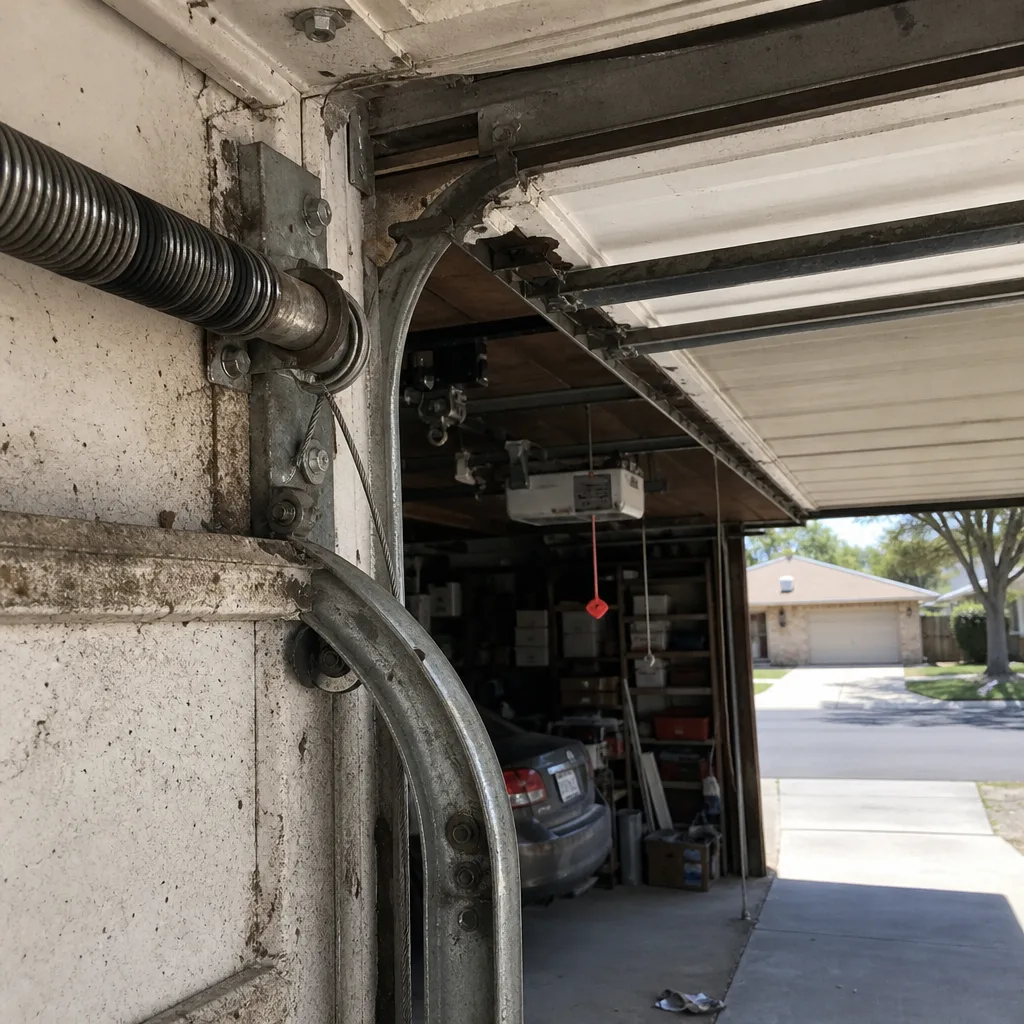 Before
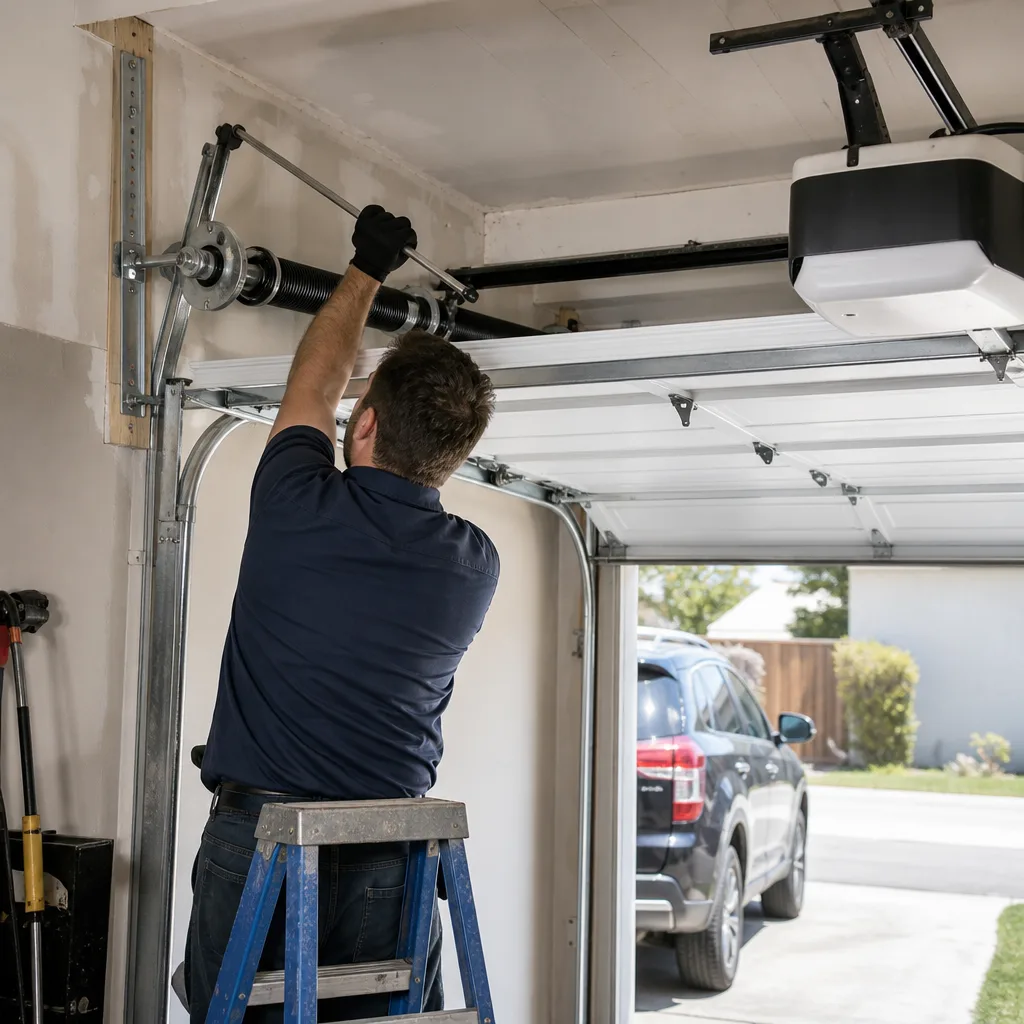 After
 Before
 After
 Before
 After