
Last updated November 2, 2026
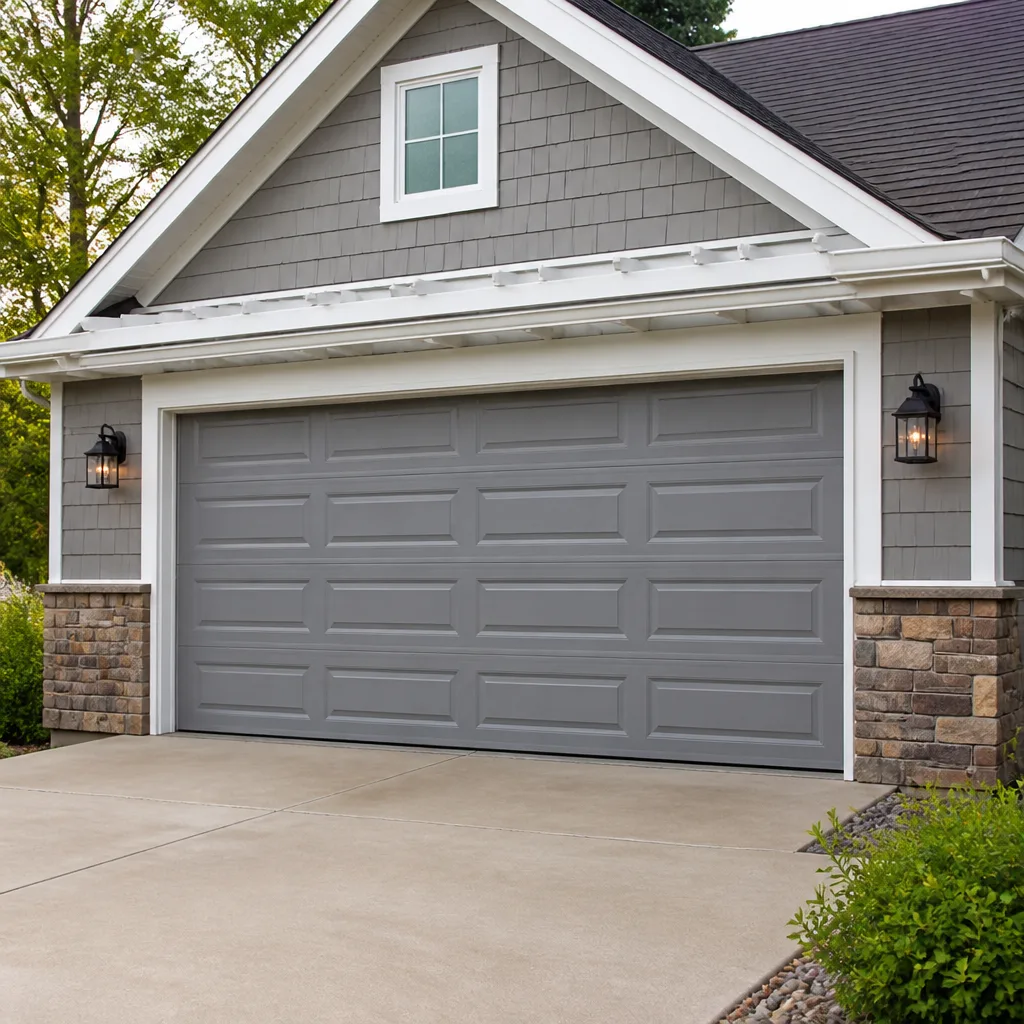 Raised-panel steel
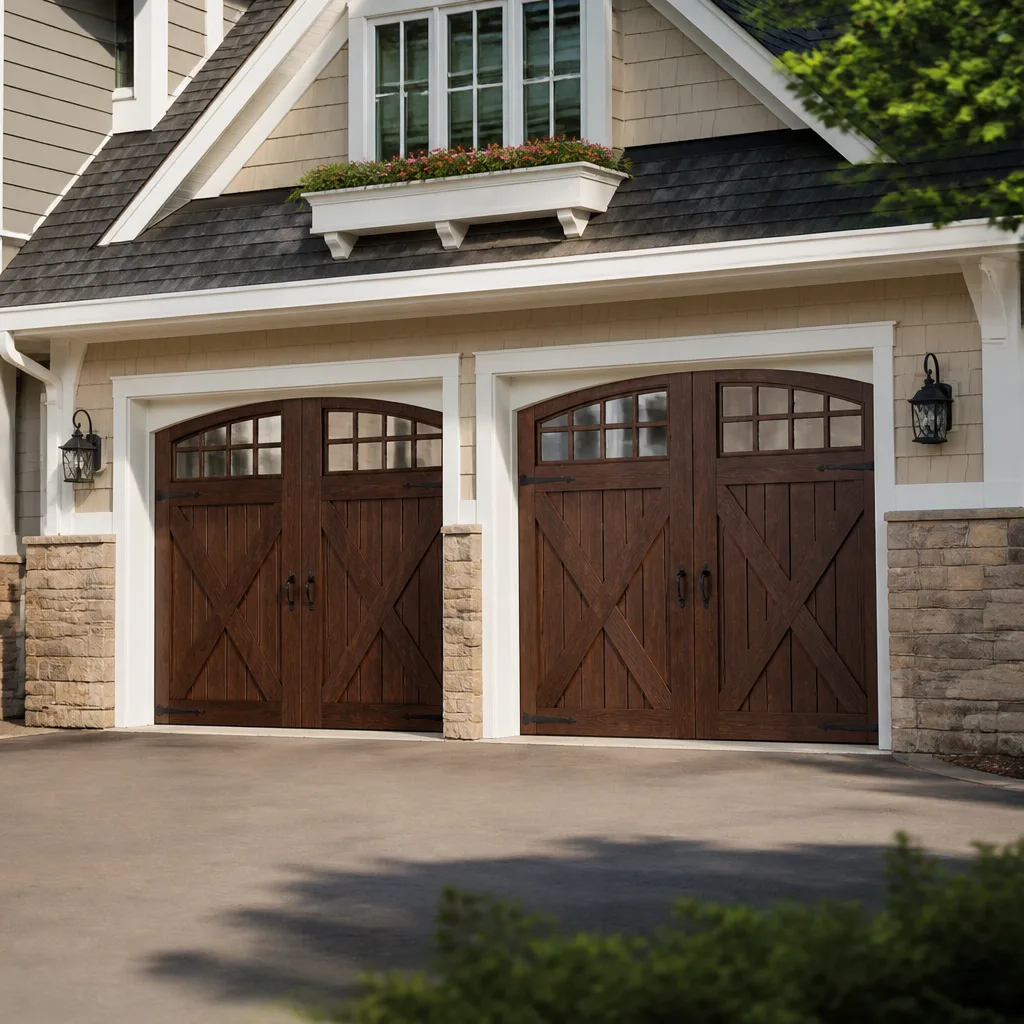 Carriage house
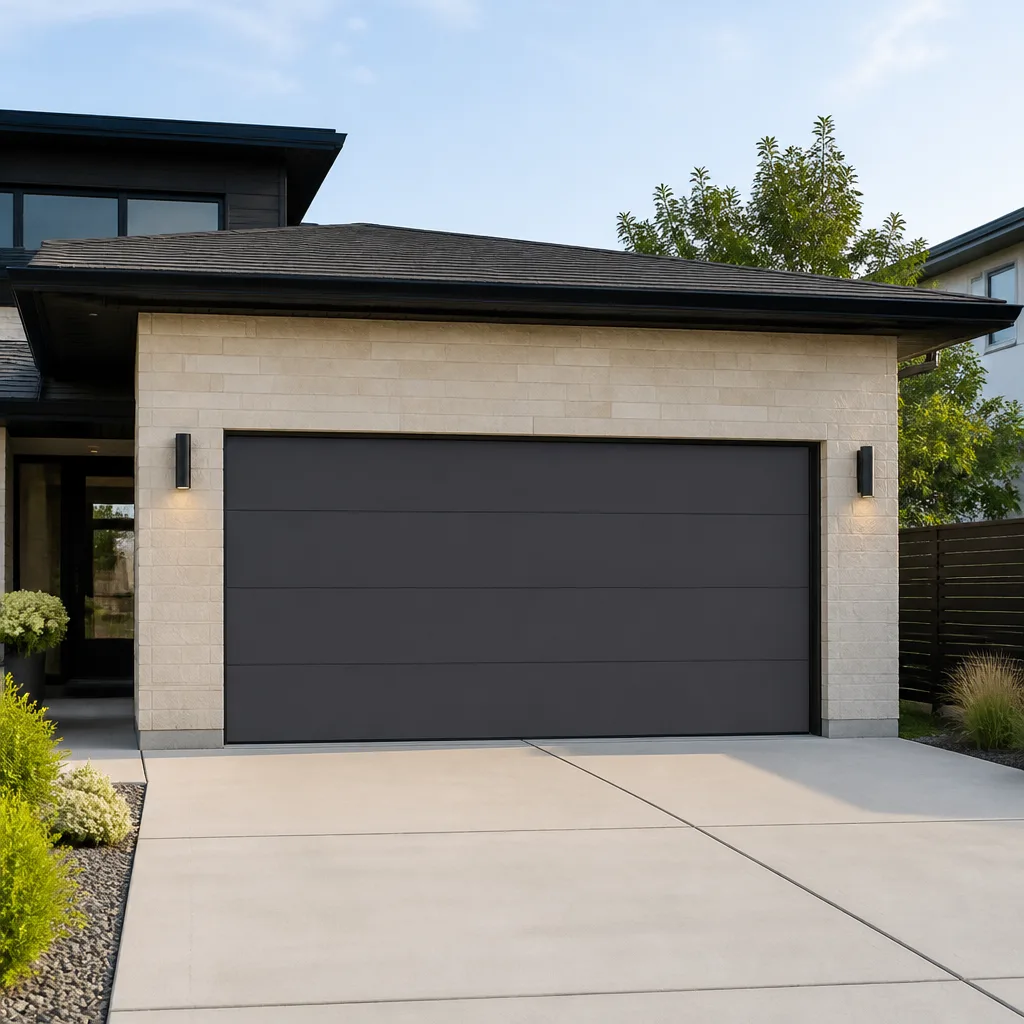 Modern flush
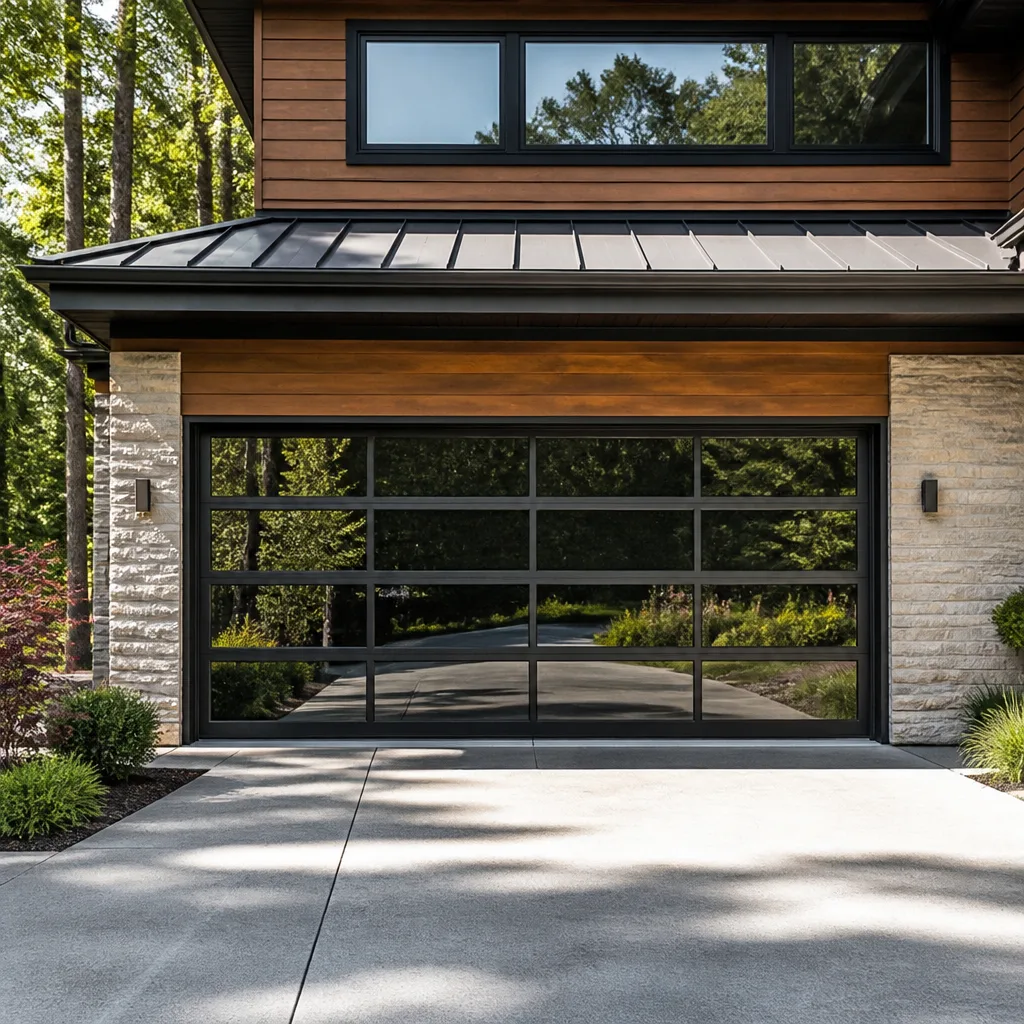 Full-view glass
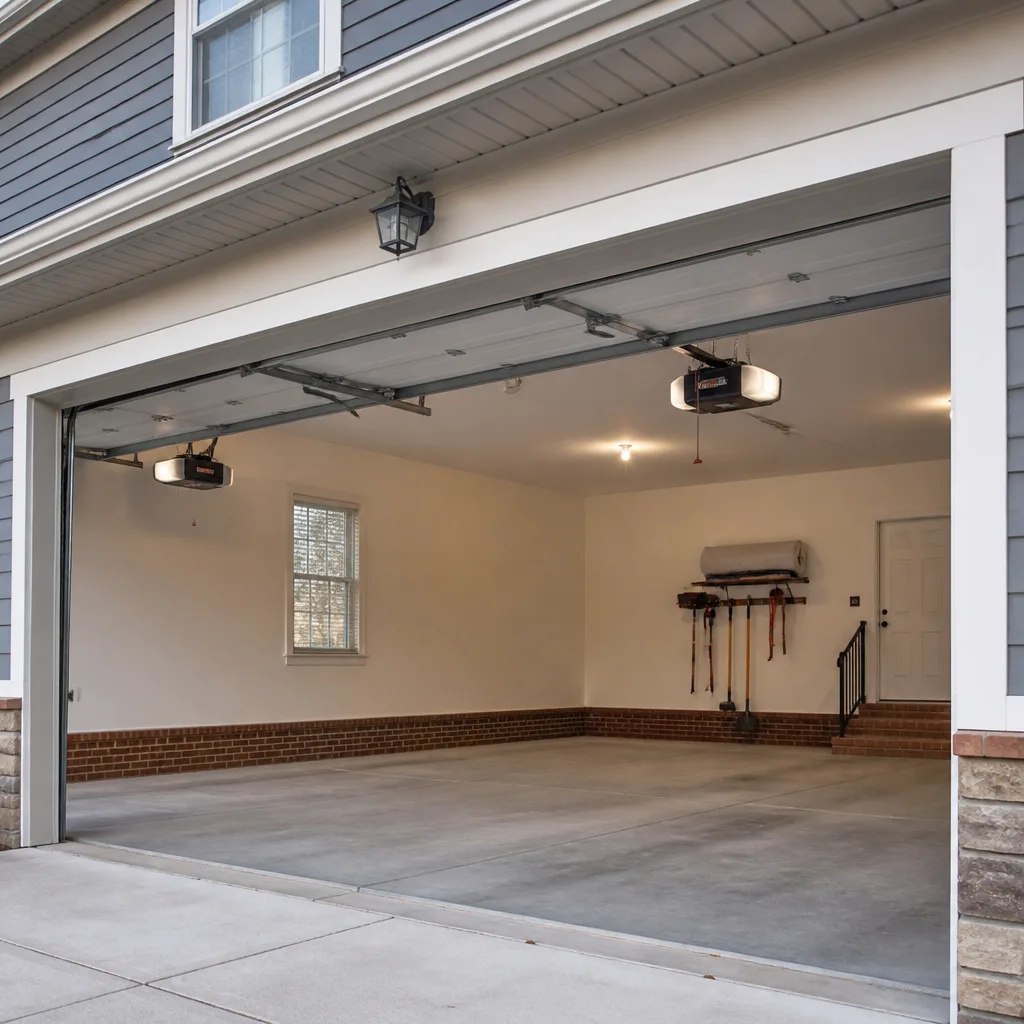 LiftMaster openers
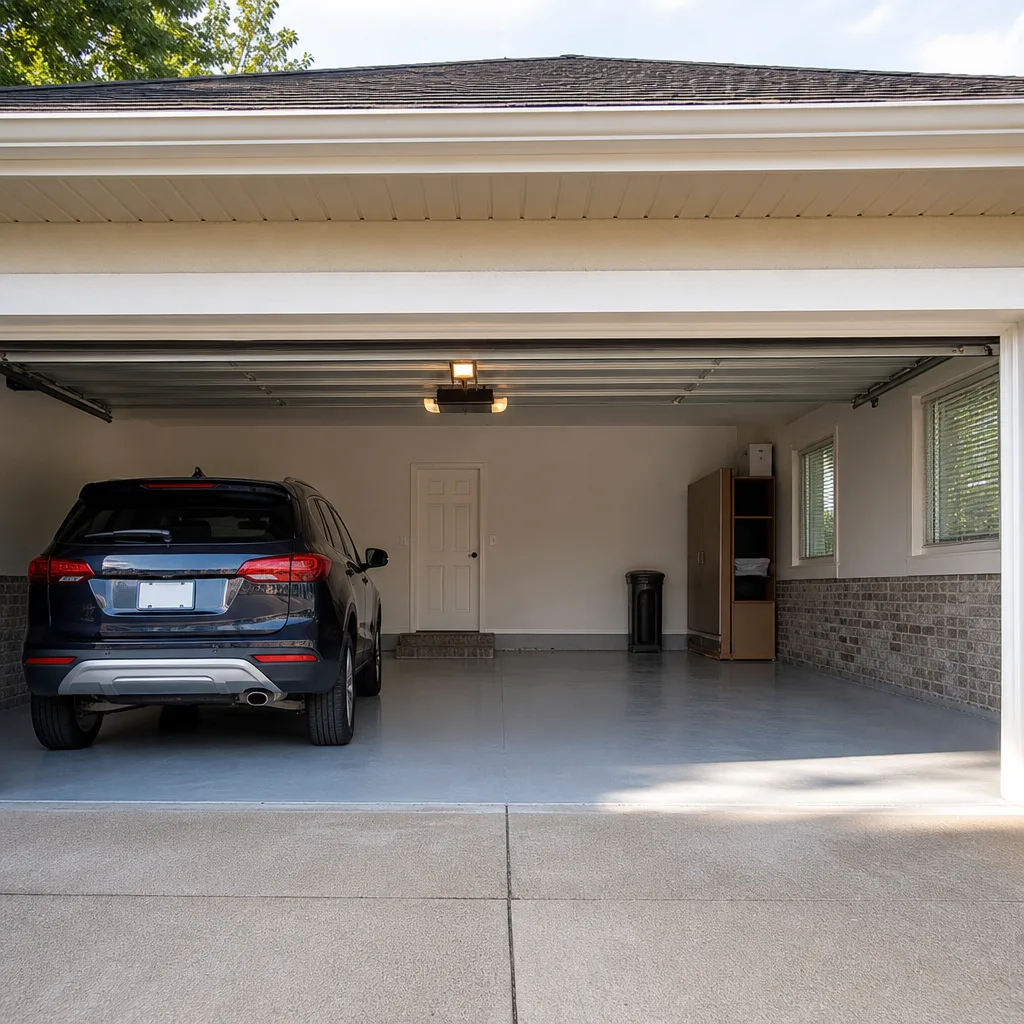 Chamberlain openers
Full 25-point door and opener safety check with every visit - springs, cables, rollers, tracks, and your LiftMaster or Chamberlain opener included
You get a price before we start. It does not change when the truck arrives.
Get your free estimateThe Complete Garage Door Repair Guide for Midway Homeowners
The average garage door has 11 moving parts. Misdiagnosing which one failed is the single biggest reason Midway homeowners overpay for repairs they didn’t need. When a door groans, shudders, or refuses to budge, the culprit is rarely the entire door – it’s a spring, a cable, a roller, a sensor, or an opener circuit board. This guide walks you through every major component, exactly how it fails, what replacement costs look like in Midway, and which repairs you can safely handle yourself versus which ones you should never attempt. You’ll learn how to read your door’s cycle rating, how coastal air shortens part life, and when a $250 spring replacement beats a $2,500 door replacement.
Quick Answer
Garage door repair in Midway typically costs between $150 and $600 depending on the component – springs run $180-$340, cables $150-$250, rollers $100-$180, and opener repairs $125-$500. Most failures trace to one of five components: torsion springs, extension springs, lift cables, rollers, or the opener. Any repair involving springs or cables carries serious injury risk, so those need a trained professional. For everything else, this guide tells you exactly what to check before you call.
Styles & brands we work with
- Raised-panel steel
- Carriage house
- Modern flush
- Full-view glass
- LiftMaster openers
- Chamberlain openers
Table of Contents
- The Anatomy of a Midway Garage Door: What Actually Breaks
- Torsion Springs: The Component That Fails Most Often
- Cables: The Silent Rust Failure Midway Homeowners Miss
- Rollers and Tracks: Noise, Binding, and Premature Wear
- Opener Issues: Reading the Symptoms Before You Replace
- How Midway’s Coastal Climate Changes Your Maintenance Schedule
- Repair vs. Replacement: Reading Your Door’s Cycle Count
- What’s DIY-Safe and What Isn’t: A Clear Line
The Anatomy of a Midway Garage Door: What Actually Breaks
A garage door is a mechanical system with seven core parts working in sequence: panels, springs, cables, rollers, tracks, hinges, and the opener. Most Midway homes have one of two spring configurations. Torsion springs sit on a metal shaft above the closed door and wind and unwind to generate lifting force. Extension springs run parallel to the horizontal tracks and stretch to counterbalance the door’s weight. Understanding which system your door uses is the first step in diagnosis, because the failure symptoms differ.
In our experience across Midway, the overwhelming majority of repair calls involve four components. Springs fail from cycle fatigue – every open-close cycle winds and unwinds the coil, eventually causing metal fatigue and fracture. Cables fail from rust, especially in humid coastal microclimates. Rollers fail as their bearings seize, dragging the door instead of rolling it. Openers fail when the logic board, capacitor, or drive gear wears out. We’ve repaired doors on homes near the Midway community’s older residential lanes where 15-year-old hardware hasn’t been touched since installation, and the failure sequence tends to follow a predictable pattern.
You don’t need to memorize every part name. But knowing which component maps to which symptom – a bang equals a spring, a shaking door equals rollers, a hum with no movement equals an opener capacitor – saves you from authorizing a service call that misdiagnoses the problem. This guide covers all three service lanes from our Wexford Garage Door Repair home repair model: component repair, opener service, and full door replacement.
Torsion Springs: The Component That Fails Most Often
Torsion springs carry the full weight of your garage door – typically 150 to 250 pounds for a standard two-car Midway garage. They’re rated for a specific number of cycles, not years. A 10,000-cycle spring on a door that opens and closes four times daily lasts about seven years. The same spring on a door cycled three times a day might last nine. When the spring breaks, you’ll know immediately. The sound is a gunshot-like crack from the garage, and the door won’t lift more than a few inches, even with the opener running.
Spring replacement costs in Midway run between $180 and $340 for a standard two-spring system, including labor. Single-spring replacements run $130 to $220. Technicians should always replace both springs even when only one fails. Springs in a pair wear at nearly identical rates, and a mismatched set causes uneven lifting that strains every other component. The replacement spring’s cycle rating matters more than the price. We specify high-cycle springs – 20,000 cycle or better – because the marginal cost is minimal and Midway’s four-season use pattern wears 10,000-cycle springs faster than the national average. When you’re on the phone with Garage Door Repair in Midway providers, ask what cycle rating their replacement springs carry.
What to check: Look at the spring above your door. A broken torsion spring shows a visible two-piece gap in the coil. If you see that, stop using the opener immediately. Each additional cycle attempt strains the lifting cable, and a frayed cable under tension is a more dangerous failure than the spring itself.
Extension spring failures present differently. The broken spring dangles or rests on the track. The door opens a few feet and stalls. Both extension springs need matching replacement, and the safety cable running through the spring’s center must be intact – that cable keeps a snapped spring from flying across the garage. This is one of the most common hazards we see in older Midway homes with original extension-spring setups.
Cables: The Silent Rust Failure Midway Homeowners Miss
Lift cables are the second most common repair on our Midway dispatch list. They attach to the bottom bracket on each side of the door and spool around drums at the top. As the door goes up, the cable wraps around the drum. As it comes down, the spring’s tension keeps the cable taut. The system works flawlessly until one cable develops fraying, kinking, or rust, and then the door’s entire balance shifts.
Midway’s coastal air accelerates cable corrosion. Homes within a mile of the ocean’s moisture line see galvanized cable rust in eight to ten years, where inland homes might get fifteen. We tell every Midway customer to inspect the base of both lift cables every three months. Run your finger along the bottom 12 inches of each cable – that’s the section that sits in the bracket and traps moisture. If you catch a rust bloom or one broken strand early, you’re looking at a $150-$250 cable replacement instead of a door-off-the-track situation that costs twice as much.
Never touch a cable that’s under tension. The cables counterbalance your door’s 200-plus pounds. When a technician replaces a cable, the spring must be unwound first – and that’s a spring tool and winding-bar operation, not a socket wrench job. Any repair manual that tells you otherwise is giving dangerous advice. A snapped cable whipping back carries enough force to break bone. This is non-negotiable, and it’s why Garage Door Opener Repair in Midway calls we run are often really cable calls – customers think the opener failed because the door hangs at an angle, but the cable broke first.
Cables and springs are companion components. If a spring was replaced three years ago and a cable breaks now, fine. But if both spring and cable are original on a twelve-year-old door, replace the cables at the same time as the springs, even if they look serviceable. The labor overlap saves the second trip charge.
Rollers and Tracks: Noise, Binding, and Premature Wear
Rollers are the most misunderstood component on a Midway garage door. They’re small wheels that ride inside the vertical and horizontal tracks, guiding the door up and over. Most original-equipment rollers are steel with unsealed ball bearings. They work fine for five to seven years, then the bearings start to seize, the roller skids instead of spins, and you hear a rumbling or grinding noise that gets progressively worse.
The diagnosis for roller failure is straightforward. Disconnect the opener by pulling the red release handle, then lift the door manually. If it’s heavy but moves, the springs are fine. If it moves roughly, with vibration or rattling at each panel joint, a roller bearing is seizing. You can inspect each roller visually along the track – flat spots on the wheel face or wobble when the door moves are the telltale signs.
Replacement rollers cost $100-$180 for a full set on a two-car door, including labor. We recommend nylon rollers with sealed bearings for Midway homes. They run quieter than steel and are less prone to moisture-related surface pitting. The upgrade is usually a $20-$40 premium over steel and is worth it on any door you plan to keep for more than three years.
Track damage is different. Bent tracks are usually the result of impact – a car bumper, a garbage can, a bike. The door jams midway because a bent section is narrower than the roller width. Tapping track back into shape with a mallet works for minor deflection, but a seriously kinked track needs replacement. Track replacement runs $125-$250 per side. If your door is older than 15 years, pricing out Garage Door Installation in Midway may make more sense than replacing tracks on a door that’s near the end of its service life anyway.
Opener Issues: Reading the Symptoms Before You Replace
The garage door opener is the most replaced component that didn’t need replacing. We’ve lost count of Midway service calls where a $15 capacitor or a $40 drive gear resolved an opener problem a previous quote said required a full unit change. Openers fail in predictable ways, and reading the symptom correctly saves hundreds of dollars.
The three most common opener failures are:
- Humming, no movement: The motor runs but the door doesn’t move. This is almost always the capacitor – a $15-$35 part that gives the motor its starting jolt. Replace the capacitor, and the opener runs again.
- Door reverses immediately after touching the floor: The travel limit or force setting is off, or the safety sensors near the floor are misaligned. Sensor alignment is a DIY task – clean the lens, check the small LED, line up the beam.
- Door opens but won’t close, or vice versa: The logic board is failing, or the wall control is shorted. Logic board replacement on a LiftMaster runs $80-$150. On a 20-year-old opener, that’s the point where replacement makes more sense.
Brand matters here. LiftMaster and Chamberlain openers dominate Midway’s installs, and each has its quirks. Chamberlain’s MyQ systems occasionally lose their wireless pairing after a power surge; the fix is a factory reset and re-pairing, not a new logic board. Genie openers use optical sensors that are more sensitive to direct sunlight than Chamberlain’s, which matters in Midway if your garage faces the setting sun. A technician who works on all of these brands every week – including Amarr and Wayne Dalton door systems – diagnoses the actual failure instead of throwing parts at the problem.
When the opener is genuinely done – gear stripped, motor burned, board fried – replacement makes more sense than repair. Openers last 10-15 years. At year 12 with a major failure, put the repair money toward a new unit. The cost spread is tighter than most people think: a $150 logic board plus labor versus $350-$500 installed for a budget-minded replacement opener.
How Midway’s Coastal Climate Changes Your Maintenance Schedule
Garage door maintenance advice written for national audiences doesn’t fully apply to Midway. The marine layer, salt-adjacent air, and seasonal humidity swings here affect every metal component on a garage door. Our service techs carry Wexford Garage Door Repair home service maps of Midway for a reason – we see the same patterns repeat block by block.
Here’s what Midway’s climate does to garage doors, and what you should do about it:
- Lubrication intervals shrink. Standard advice says lubricate rollers, hinges, and bearings every six months. In Midway, do it every four. The moisture in the air accelerates the drying of light lubricants. Use a lithium-based grease on the chain or screw, and a spray silicone lubricant on rollers and hinges. Don’t use WD-40 – it’s a solvent, not a lubricant, and it strips away the protective film.
- Torsion spring corrosion worsens near the coast. Surface rust on a spring is cosmetic. Pitting, flaking, or visible metal loss is structural. If the rust has progressed to pitting, replace the spring even if it hasn’t snapped. A pitted spring is on borrowed time.
- Wood doors need finish protection. If your Midway home has a wood or wood-composite garage door, the marine air attacks the finish from the bottom edge first. Water wicks up through the bottom of the panels. Re-seal the bottom edge every two years. Most Midway homes built after 2005 use steel or aluminum doors – Clopay and Amarr models are common – and those are much less climate-sensitive.
- Sensor misalignment is more common in coastal light. Direct low-angle sunlight hitting the safety sensor eyes causes nuisance reversals. If your door bounces back open, clean the sensor lenses, then shield them with a small cardboard tube or a commercially available sensor hood. This is a $5 fix that we suspect has prematurely ended a few perfectly good openers in Midway.
The cumulative effect is this: a garage door that gets routine cleaning, lubrication, and visual inspection in Midway lasts five to eight years longer than one that’s ignored. The maintenance is simple and most is DIY-safe. The repair is not always, which is the next section.
Repair vs. Replacement: Reading Your Door’s Cycle Count
The financial decision between repairing and replacing a garage door comes down to three numbers: the door’s age, the spring’s cycle rating, and the cost of the failed component. A $250 spring replacement on a ten-year-old door is a straightforward repair. A $250 spring replacement on a 25-year-old door with rusted panel edges and a failing opener is stopgap money.
Here’s how to calculate the smart move for your Midway home:
- Identify your door’s cycle rating. Most builder-grade doors come with 10,000-cycle springs. Premium models from Clopay, Amarr, and Raynor often come with 20,000 to 30,000-cycle springs. If your door came with the house and you don’t know the rating, assume 10,000 cycles.
- Estimate your annual cycle count. Count how many times your door opens and closes in a typical week, multiply by 52. A door used four times a day, seven days a week, hits about 1,460 cycles a year. That’s roughly a seven-year spring life on 10,000-cycle springs.
- Check the panel condition. Steel panels with rust at the bottom rail, sagging sections, or cracked insulation indicate the door itself is aging out. Repairing the springs on a door whose panels are failing is like replacing tires on a rusted frame. It moves, but nothing is actually fixed.
- Compare the repair cost to 30% of replacement cost. If the repair total – all components, not just the one that failed – exceeds 30% of a full door replacement, replace the door. On a $2,500 new door, that threshold is about $750 in cumulative repair work.
We quote both paths on every Midway call. If the repair is the right financial move, you’ll hear that from us. If the door is past its serviceable life, we’ll recommend a Garage Door Installation in Midway path and give you a written price for both the fix and the full replacement. Our job is to give you the numbers you need to make the decision, not to push whichever path has the higher ticket.
What’s DIY-Safe and What Isn’t: A Clear Line
Every garage door repair lands in one of two categories: safe for a competent homeowner to attempt, or dangerous enough that professional training is the only responsible option. The line is drawn at the tension system. Springs and cables are always under whatever many pounds of tension your door weighs, and releasing that tension incorrectly is how people get seriously hurt.
DIY-safe repairs:
- Lubricating rollers, hinges, bearings, and the opener rail
- Cleaning and aligning safety sensors
- Tightening loose hinges, bolts, and track brackets
- Replacing remote controls and reprogramming opener codes
- Clearing debris from the track
- Inspecting cables and springs for visible damage
Professional-only repairs:
- Torsion spring replacement or adjustment – requires winding bars and precise tension release
- Extension spring replacement – requires safety cable and proper spring match
- Cable replacement or reattachment – a cable under tension can snap with enough force to lacerate or fracture
- Track replacement or major realignment – the door’s travel geometry has to stay square
- Opener logic board replacement – high voltage capacitor discharge is a real risk even unplugged
We’ve had Midway customers ask us to coach them through spring replacement over the phone. The answer is always no, and it’s not about job protection. It’s about the winding bars, the spring rating calculation, the retaining bolt, and a dozen other details that only matter when something goes wrong. A garage door spring is not a car strut or a faucet cartridge. When it lets go, it doesn’t lose pressure – it releases all its stored force at once.
Common Mistakes to Avoid
- Replacing one spring instead of both. Paired springs wear evenly. Replacing one creates a mismatched balance that strains every other component and shortens the new spring’s life. Any technician who recommends replacing just one is cutting a corner you’ll pay for within two years.
- Using WD-40 as a lubricant. WD-40 is a solvent. It cleans grime and then evaporates, leaving metal dry. Use white lithium grease on the opener screw or chain, and spray silicone on rollers and hinges. This is the single most common maintenance mistake we see in Midway garages.
- Ignoring a noisy door. Garage doors are supposed to be quiet. A new grinding, squealing, or popping noise is an early warning. Early intervention on a failing roller bearing costs $8. Ignored until the roller seizes and scores the track, the repair becomes $250.
- Forcing the door when it resists. If a door won’t lift manually and the opener is disconnected, the spring has failed or a cable has jammed. Forcing it bends panels, tears brackets, and turns a one-component repair into a multi-component repair.
- Painting over rusted hardware. Painting a rusty cable or spring hides the damage and traps moisture against the metal. Rust on structural components needs inspection, not paint.
- Disconnecting the opener and expecting the door to stay put. Opening the red release handle with a broken spring causes the door to fall freely. A 200-pound door hitting the ground cracks panels and can bounce. Never pull the release handle unless you know the door is balanced.
See the difference
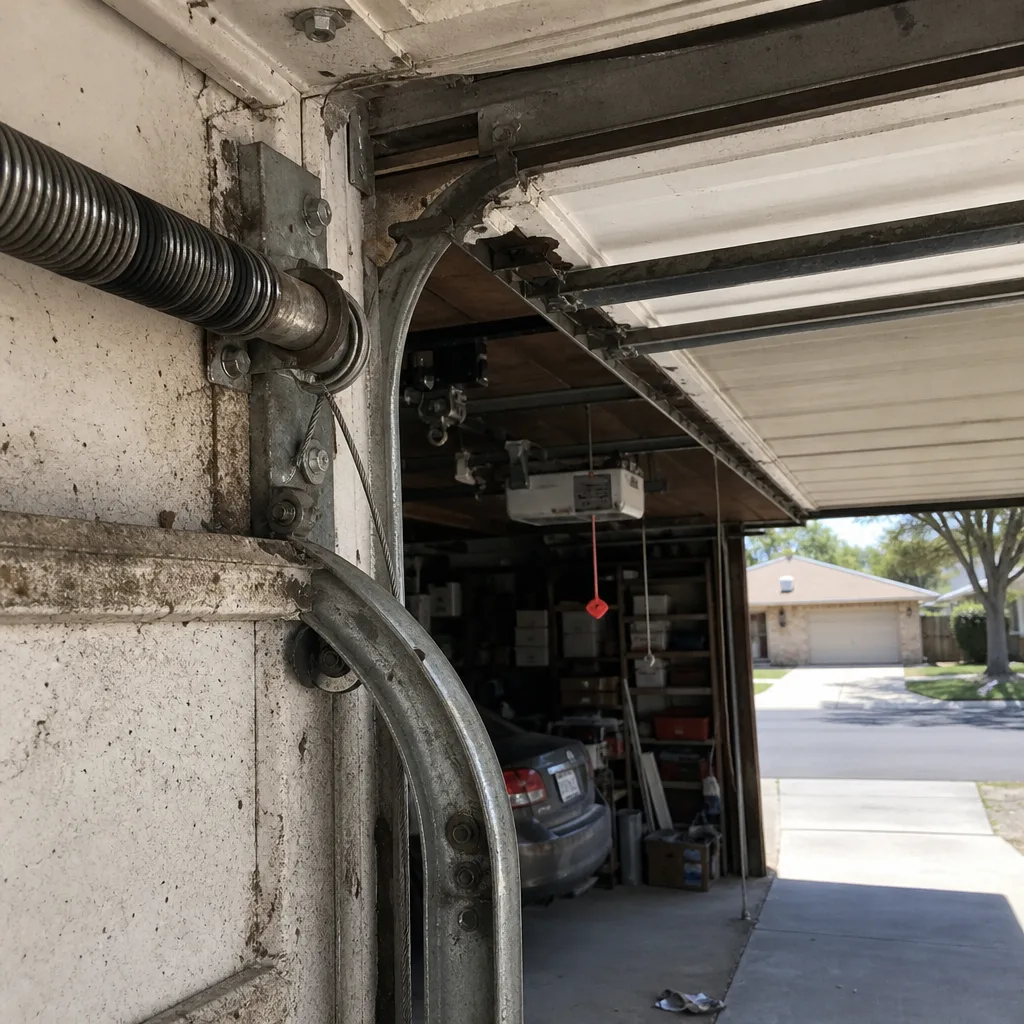 Before
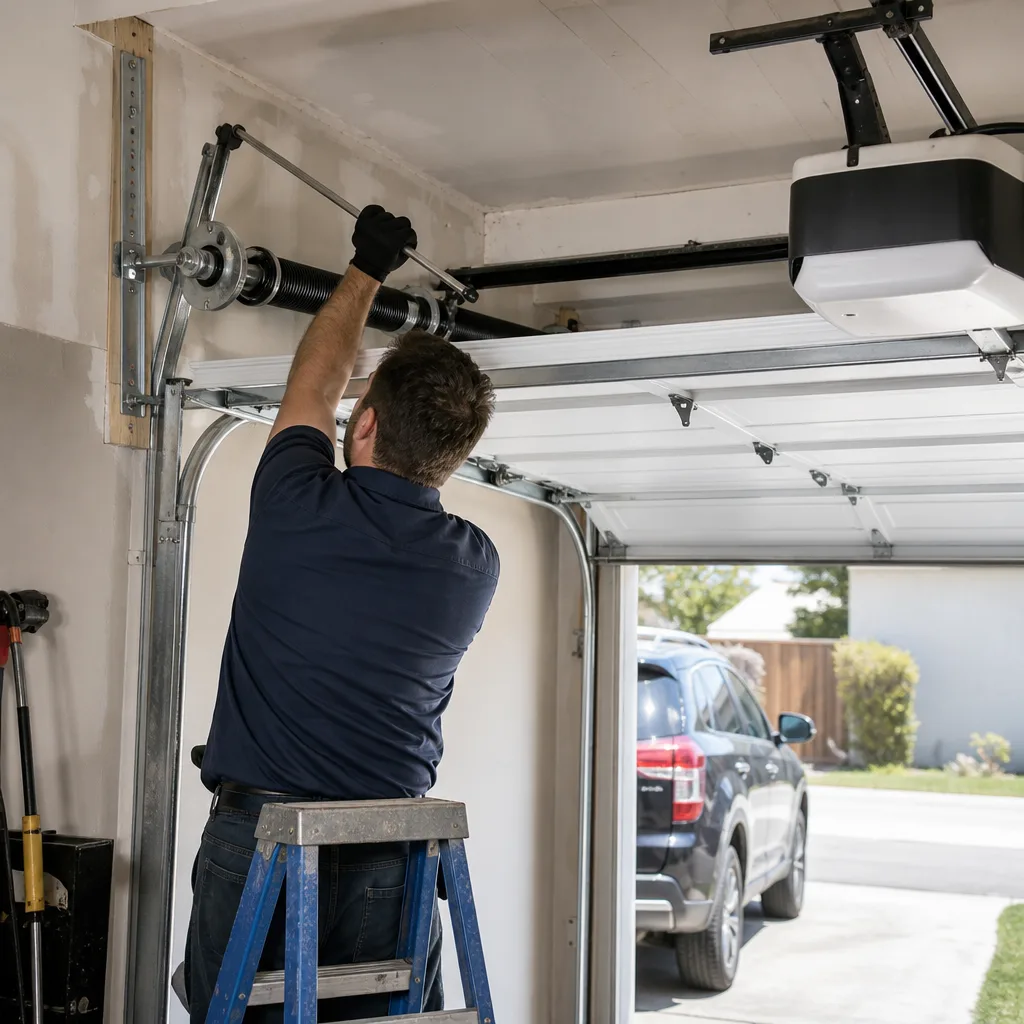 After
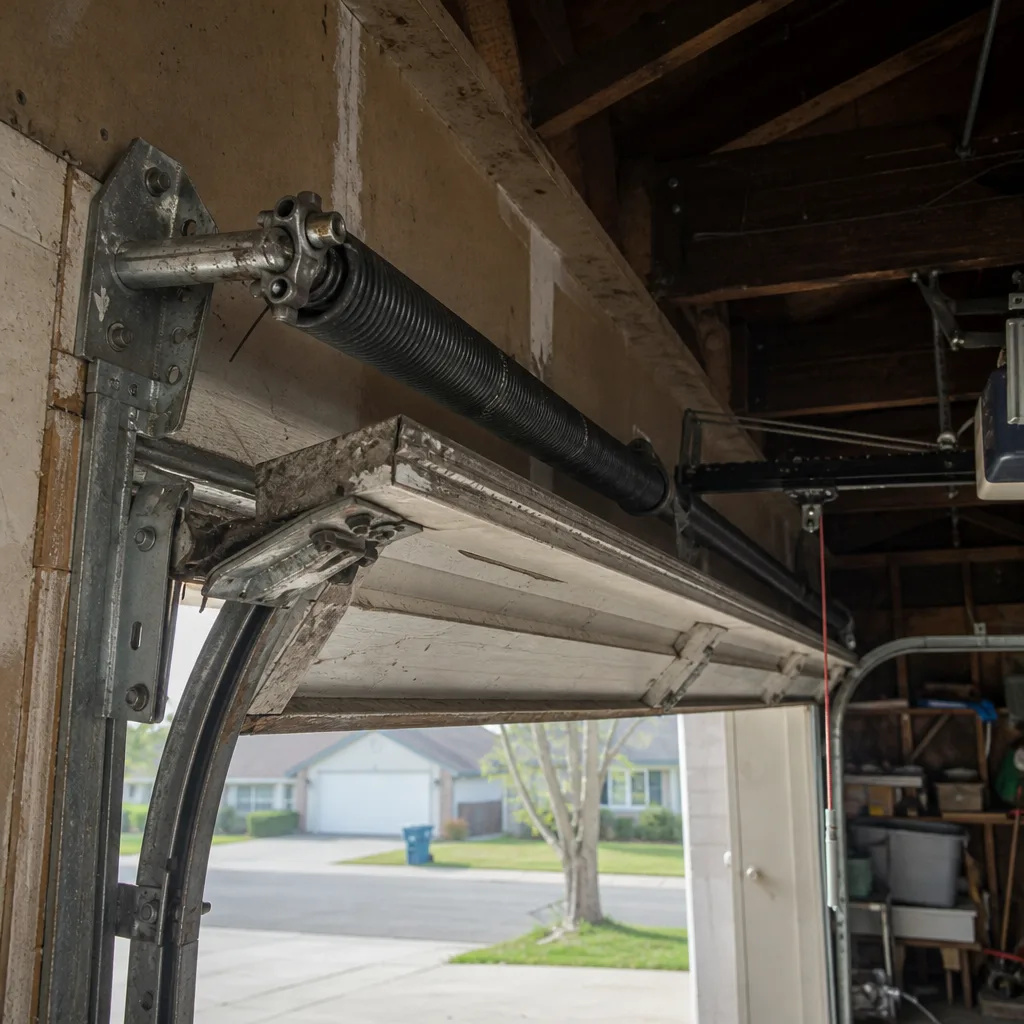 Before
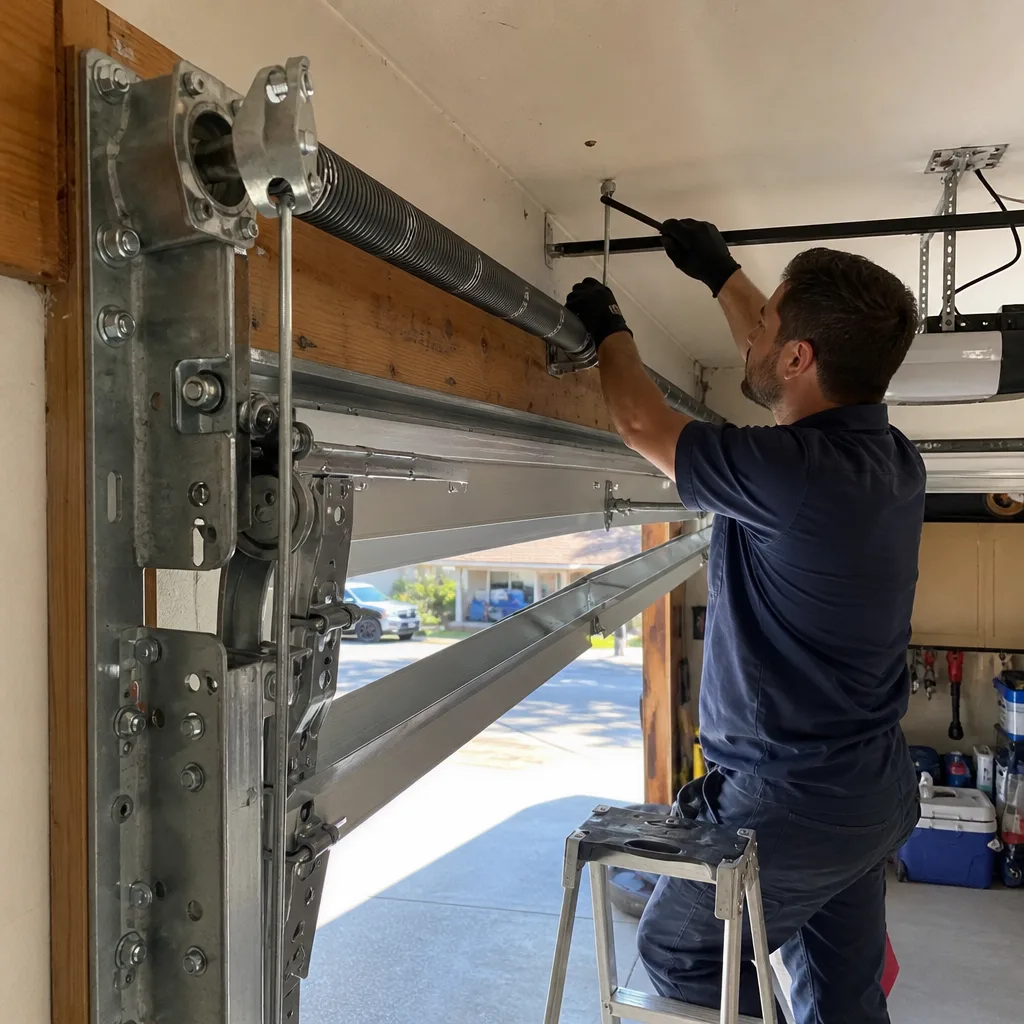 After
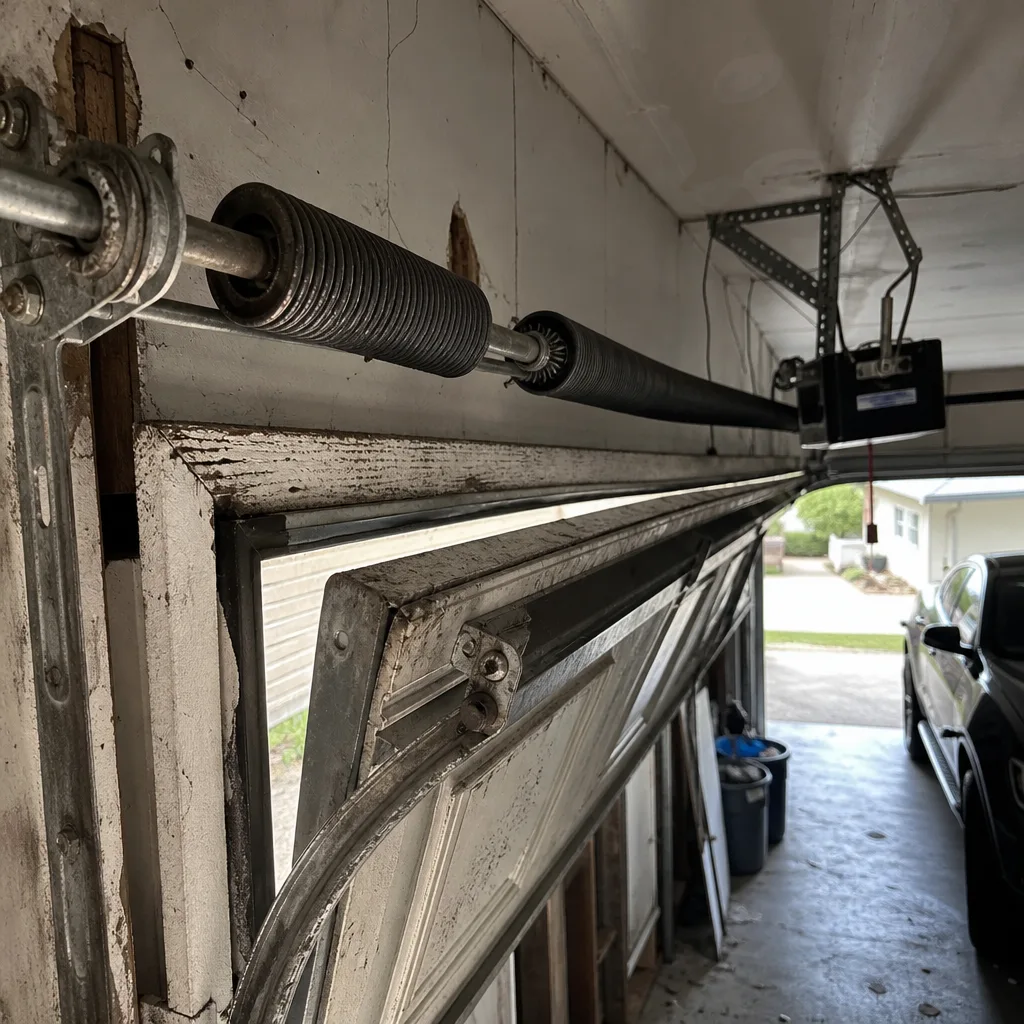 Before
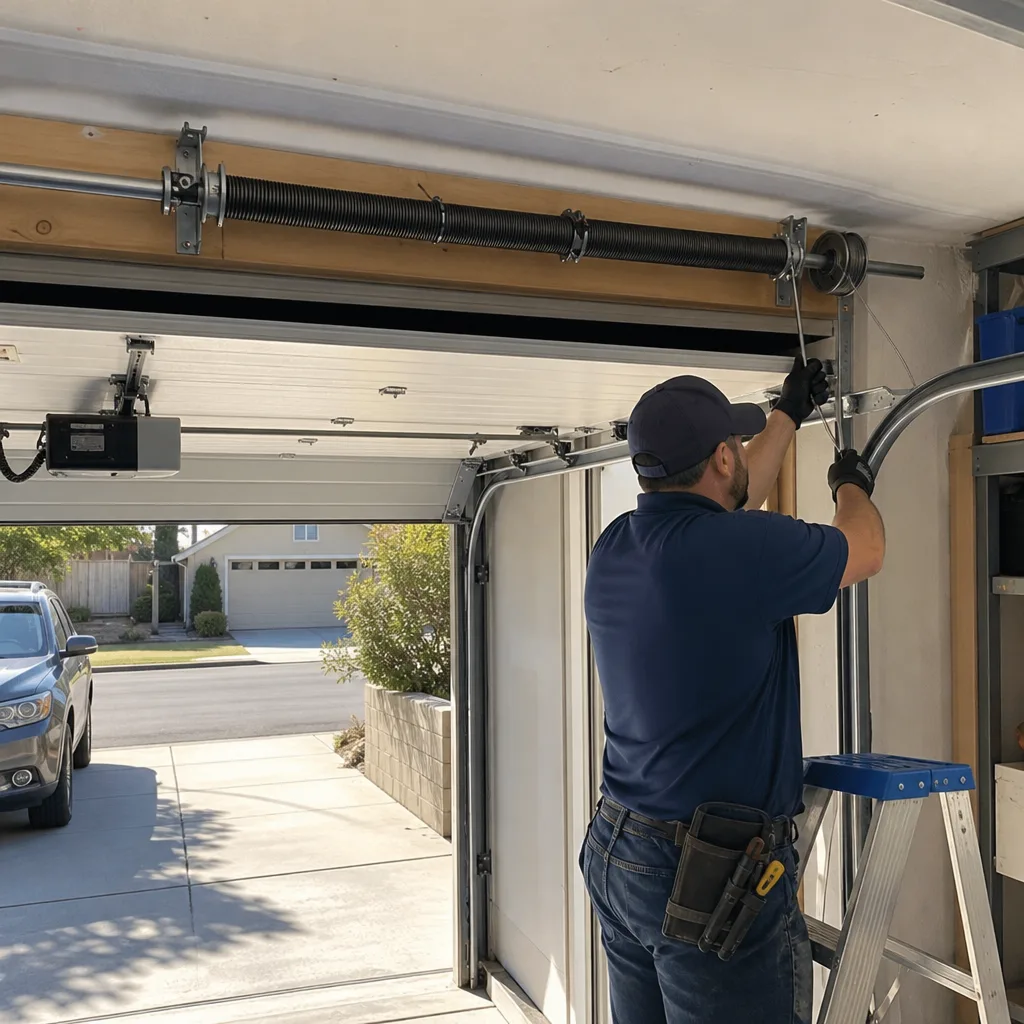 After
When to Call a Professional
Call a professional if you hear a bang from the garage, if your door hangs at an angle, if the door is too heavy to lift manually, if the cable is frayed or off its drum, or if the opener hums without moving the door. These symptoms mean a component has failed completely, and continued use – even manual operation – risks compounding the damage. We also recommend calling before any job that involves removing or adjusting a spring, cable, or drum regardless of description. Wexford Garage Door Repair offers free estimates in Midway – call (833) 589-9949 and we’ll send a technician out. The quote is always agreed before we start any work, and we’ll walk you through exactly which component failed and why.
Frequently Asked Questions
Most Midway garage door repairs run $150 to $600. Specific ranges: torsion springs $180-$340, cables $150-$250, rollers $100-$180, opener capacitor $35-$75, logic board $80-$150, track replacement $125-$250 per side. Your exact total depends on what failed and whether paired components need replacement at the same time. Call (833) 589-9949 for a free estimate – we quote a firm price before any work begins.
No. Torsion and extension springs are under hundreds of pounds of tension and release that force instantly when they fail. Proper spring replacement needs winding bars, a spring rating calculation, and precise tension balancing. The injury risk is severe, and the savings isn’t worth it. This is a job for a trained professional, no exceptions.
A standard 10,000-cycle torsion spring lasts about seven years in a typical Midway home with four open/close cycles a day. Higher-cycle springs rated at 20,000 cycles last twelve to fourteen years. Coastal moisture doesn’t directly shorten the cycle count, but it accelerates surface corrosion, so a pitted spring on a humid property may need replacement before it reaches its rated cycle life.
The safety sensors near the floor are misaligned or blocked. Check that both sensor LEDs are lit and the lenses are clean. Low afternoon sun hitting the sensor directly is a common Midway-specific cause of nuisance reversals – shield the lens with a small hood or reposition the sensor bracket. If sensors are aligned and the door still won’t close, the opener’s logic board may be failing.
It depends on the door’s panel condition and cumulative repair cost. If the panels are sound and the failed component is a spring or roller set, repair is almost always the right call. If the repair total exceeds about 30% of a new door’s cost – roughly $750 on a $2,500 door – replacement makes more financial sense. We quote both paths on every Midway repair call so you can decide with real numbers.
No. We quote a firm price after diagnosis and before any work begins. The price we give you is the price you pay – if additional damage is found mid-repair, we stop and re-quote before touching it. That’s how every garage door repair in Midway should work, and it’s how we operate.
The Bottom Line
Your garage door is a mechanical system with a distinct failure pattern. Springs break from cycle fatigue. Cables rust in Midway’s coastal air. Rollers seize and get noisy. Openers lose capacitors and logic boards. Every one of these has a specific repair path, and most cost far less than a door replacement. Know which component you’re dealing with, maintain the door on a four-month lubrication schedule, and don’t touch springs or cables yourself. When something fails, call (833) 589-9949 for a free estimate from a garage door specialist who works on your brand – LiftMaster, Chamberlain, Genie, Clopay, Amarr, Wayne Dalton, Craftsman, and Raynor – not a generalist guessing at the fix.
Written by the team at Wexford Garage Door Repair, serving Midway since 2017.