
Last updated November 2, 2026
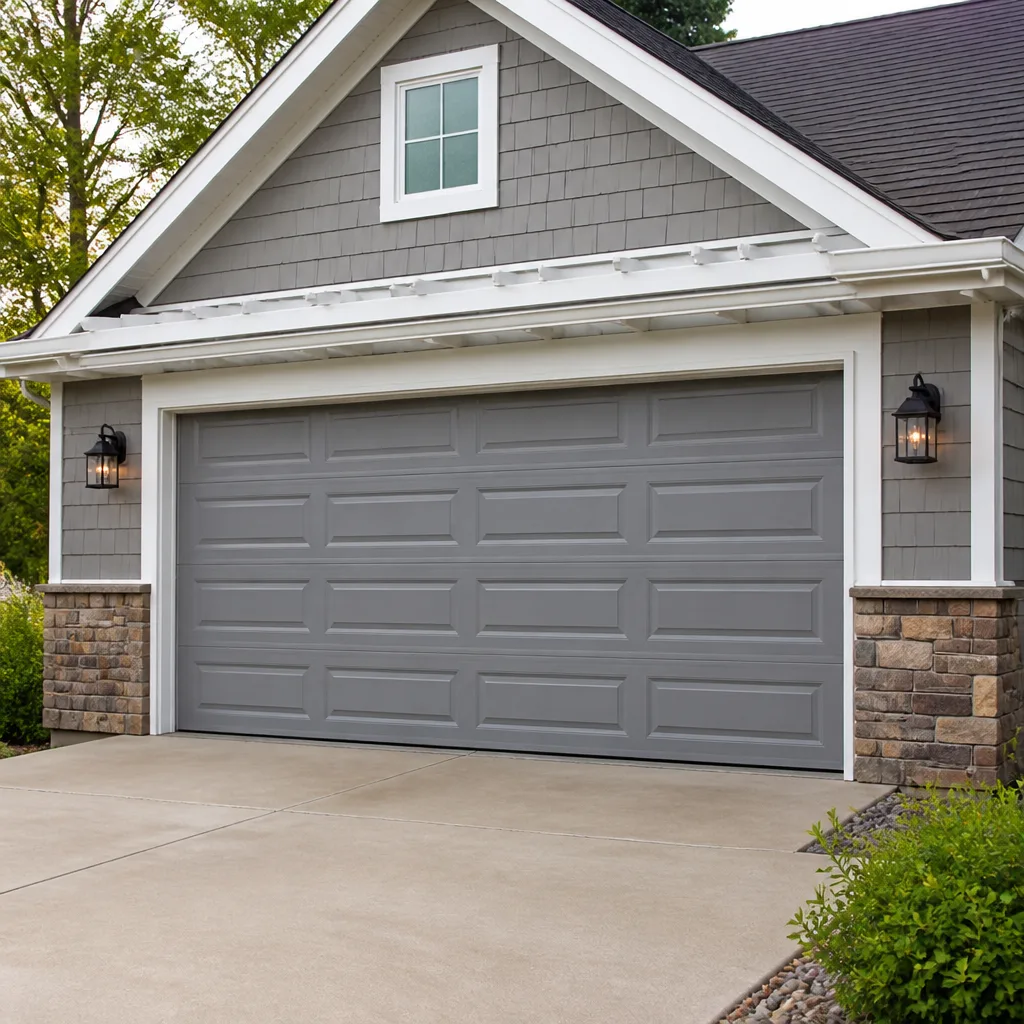 Raised-panel steel
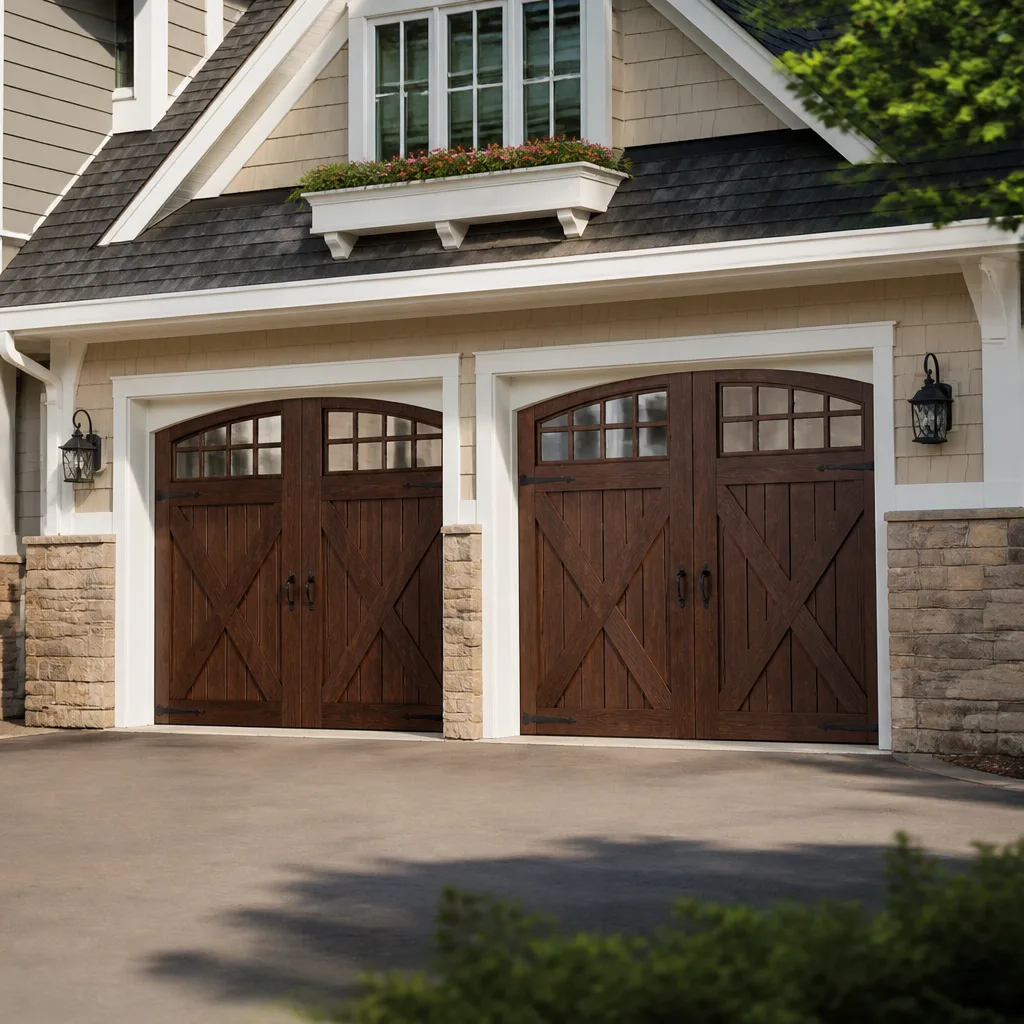 Carriage house
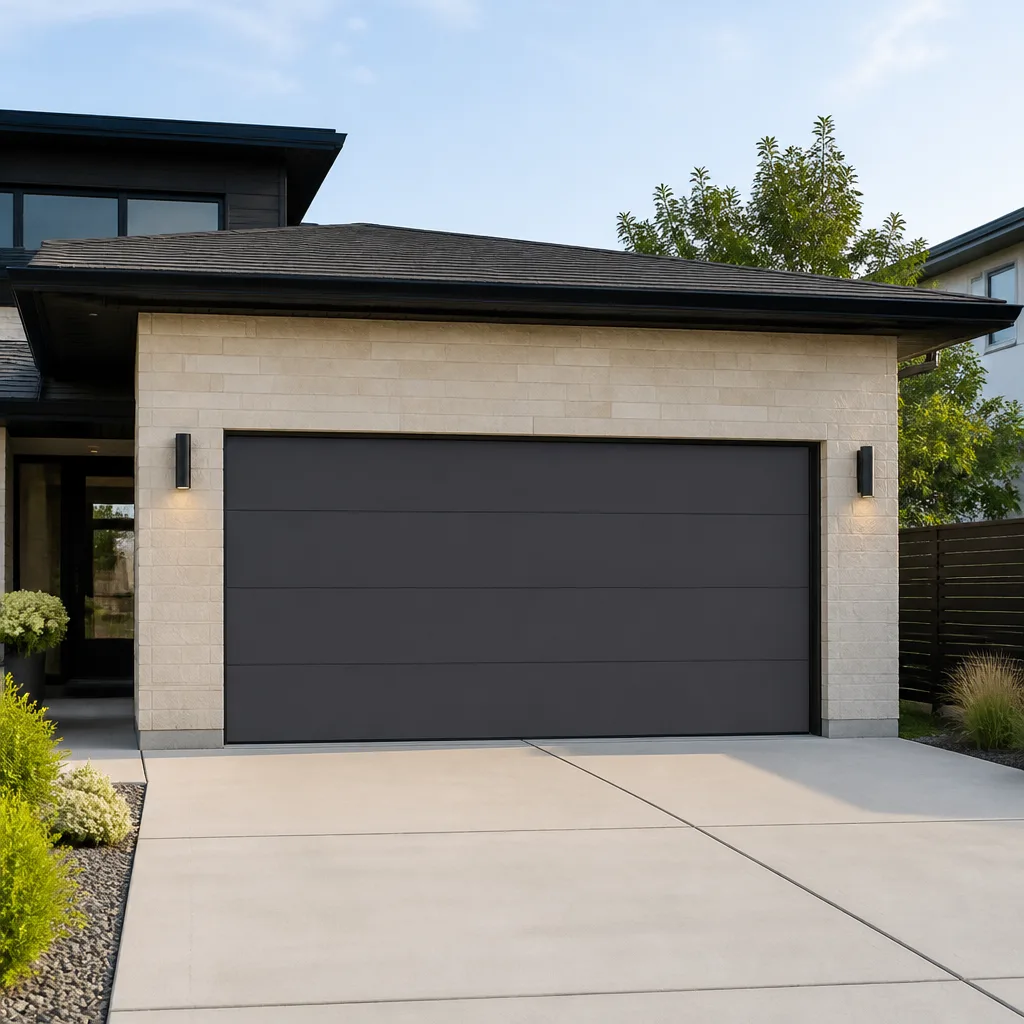 Modern flush
 Full-view glass
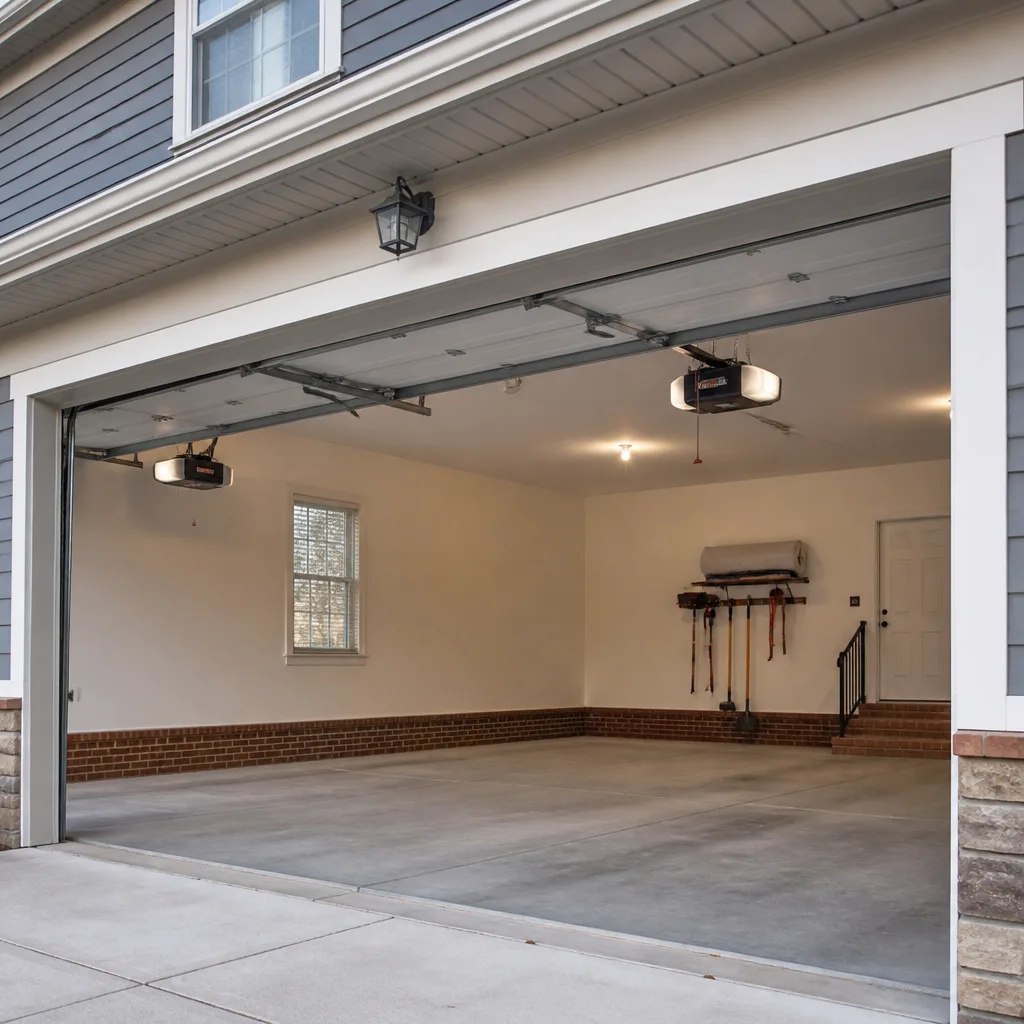 LiftMaster openers
 Chamberlain openers
Full 25-point door and opener safety check with every visit - springs, cables, rollers, tracks, and your LiftMaster or Chamberlain opener included
You get a price before we start. It does not change when the truck arrives.
Get your free estimateGarage Door Warning Signs: A Midway Homeowner’s Reference Guide
Here’s a number that should wake you up: most garage door failures we respond to in Midway were broadcasting warnings for four to six weeks before anything actually broke. A door that hesitates for half a second before moving isn’t being “slow to warm up” – it’s the opener’s force setting fighting against an out-of-balance spring, which is measuring how close you are to a mid-cycle failure. Springs don’t snap without telegraphing it first. Cables don’t jump drums without visible wear beforehand. This guide teaches you to read those early signals before they become 7 a.m. emergency calls with your car trapped inside the garage.
Styles & brands we work with
- Raised-panel steel
- Carriage house
- Modern flush
- Full-view glass
- LiftMaster openers
- Chamberlain openers
Quick Answer
The most common garage door warning signs in Midway CA are a door that hesitates or jerks when starting to move, a visible gap between the spring coils, grinding or squealing noises that change pitch when the door travels, cables that show fraying near the bottom bracket or drum, and an opener that runs but needs multiple attempts to lift the door. If you notice any of these, the underlying component is already failing – springs in particular can snap without additional audible warning once the first visible gap appears in the coil.
Table of Contents
- Visual Signs That Your Door Is Out of Balance
- Noise Diagnostics: What Each Sound Actually Means
- How to Spot Cable Wear Before It Snaps
- The Opener vs. Door Problem: A Midway-Specific Confusion
- The 10-Second Roller Test You Can Do Tonight
- Age Milestones: When Components Fail on Schedule
- Common Mistakes to Avoid
- When to Call a Professional
- Frequently Asked Questions
- The Bottom Line
Visual Signs That Your Door Is Out of Balance
A garage door that’s properly balanced will stay put when you stop it midway in the tracks. A door that’s out of balance will drift down, drift up, or creep until it finds a resting point. The difference matters because balance problems are almost always spring problems, and spring problems become broken-spring problems faster than most Midway homeowners expect.
Here’s what we see in the field, and this is the part most reference guides miss: an out-of-balance door and a door with a broken spring look nearly identical from the outside. Both will sit slightly crooked. Both will feel heavy. Both will strain the opener. The difference is in the spring itself.
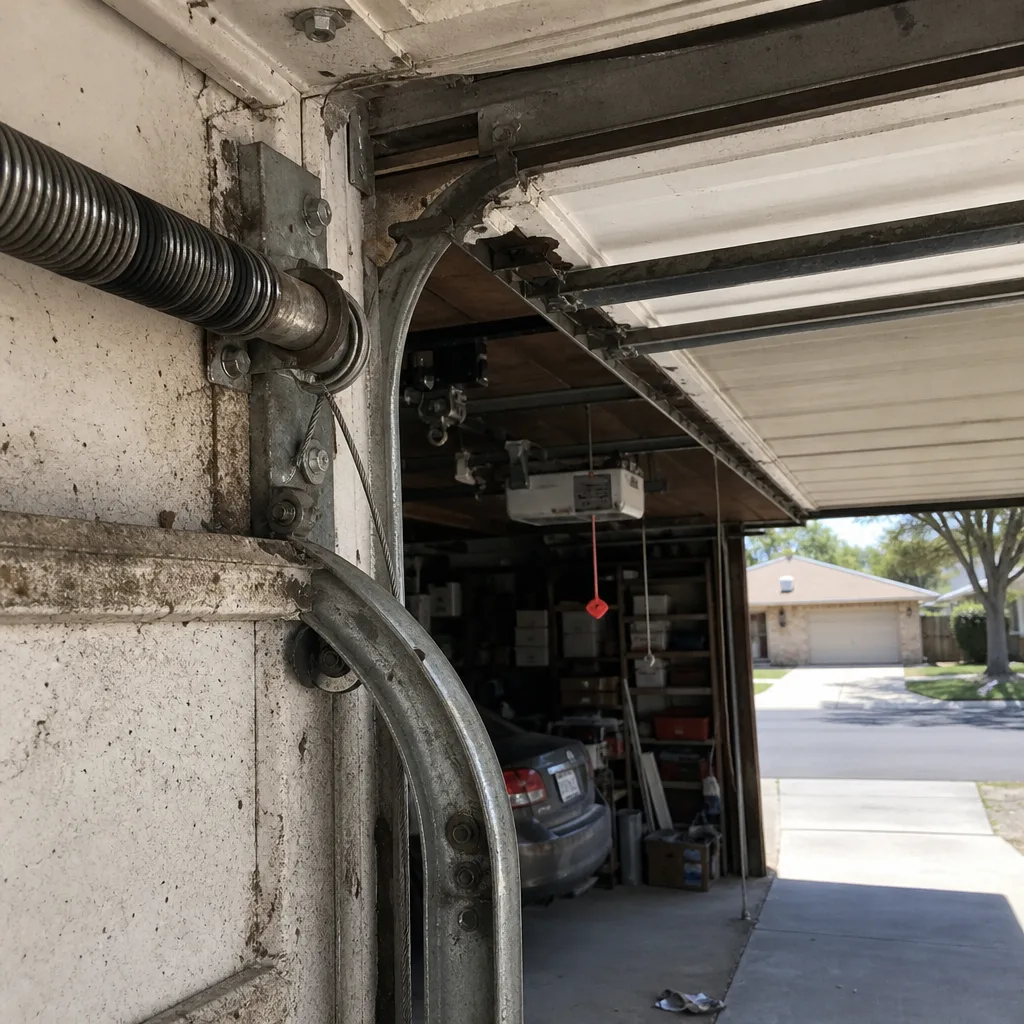
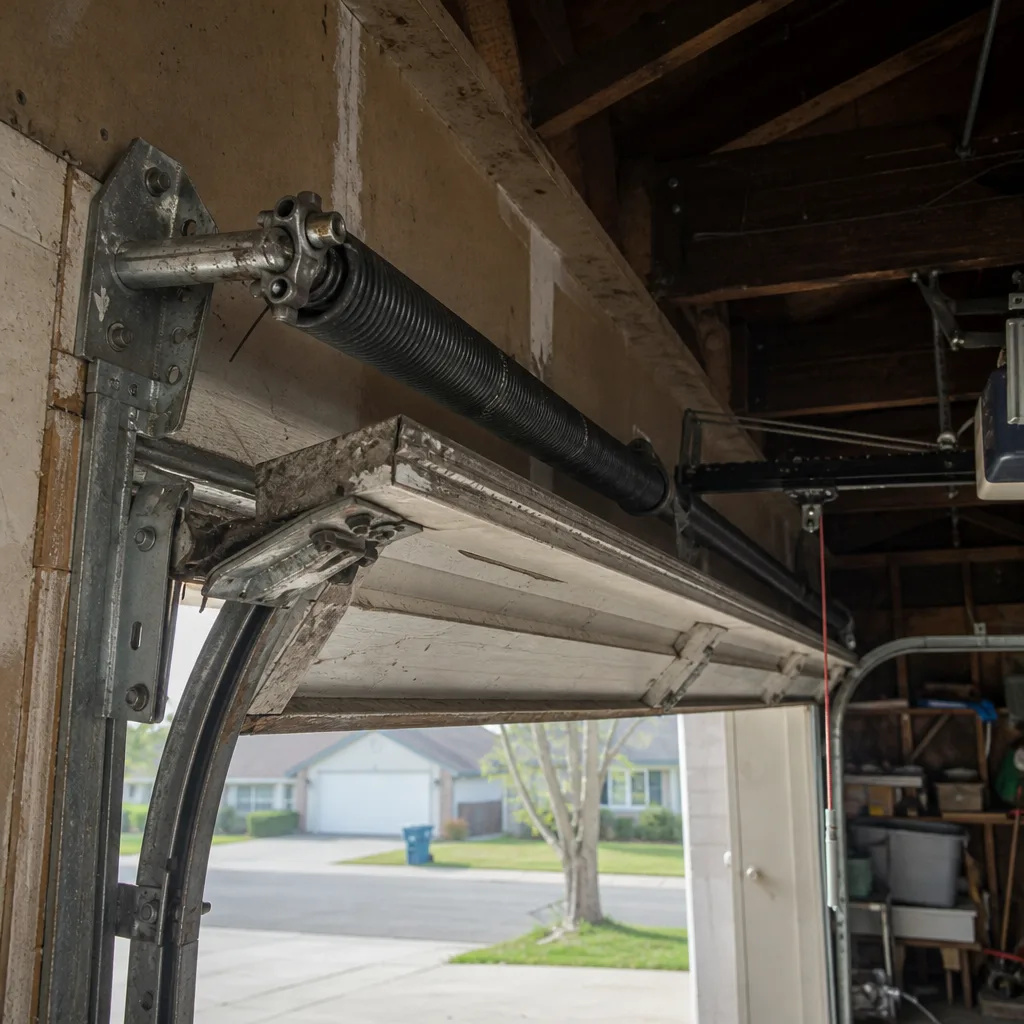
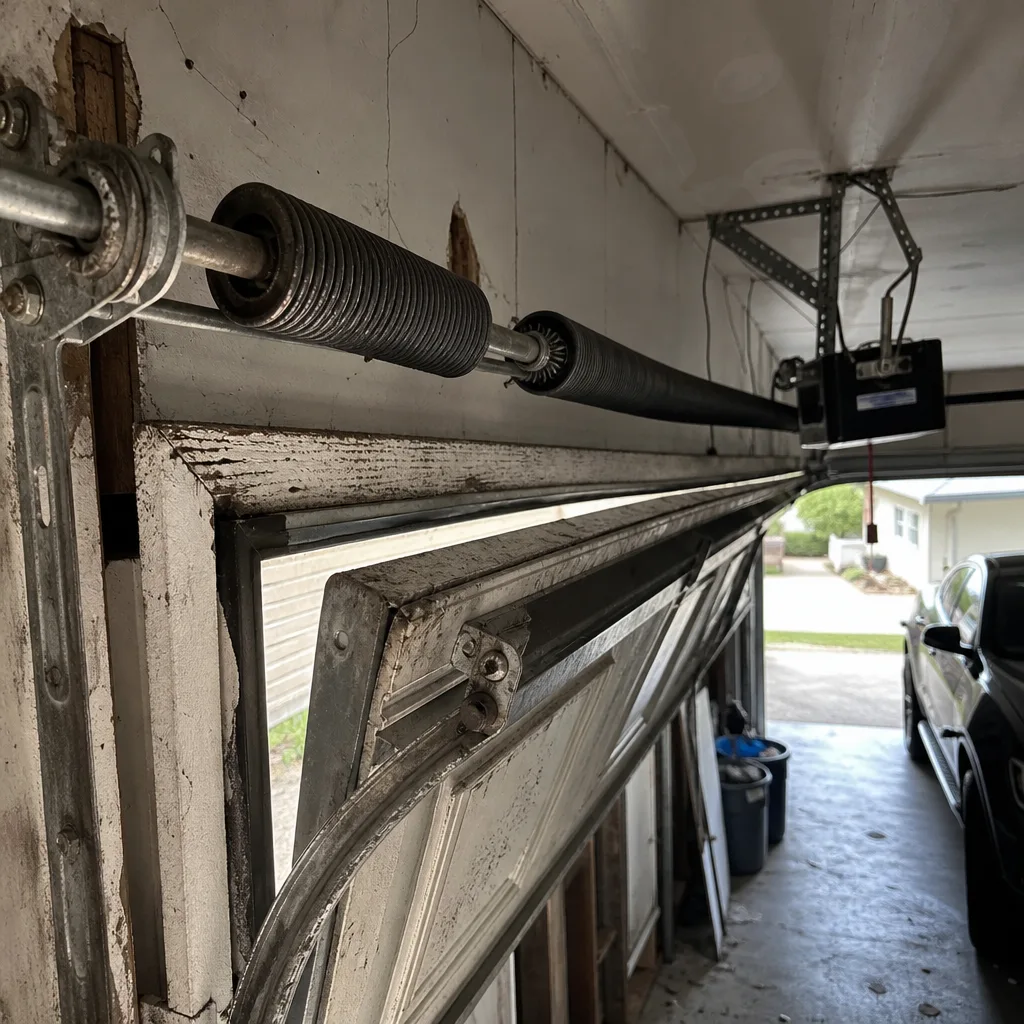
On a torsion spring system – the kind mounted above the door opening on a metal shaft – you can spot the early warning by looking at the coil gaps. A healthy spring has coils that sit snug against each other with no visible space between them. When a spring starts to fatigue, you’ll see a gap form between individual coils, often starting at one end and spreading. That gap means the metal has permanently stretched. Once you can slide a dime between coils, the spring is in its final phase of life. On many Clopay and Amarr doors in Midway, this type of coil separation appears two to four weeks before the spring actually snaps.
On an extension spring system – the older style with springs running parallel to the horizontal tracks – the warning sign is different. Look at the safety cable that runs through the center of each spring. If that cable is slack, meaning it sags instead of running straight, the spring has already stretched beyond its designed length. A stretched extension spring is a broken spring waiting to detach, and on a Wayne Dalton door from the early 2000s, we see exactly this failure pattern.
One more visual check that costs you nothing: stand inside the garage with the door closed and look at the gap between the door and the floor on both sides. If one side sits tighter than the other, the door itself may have shifted on its hinges or the track may be pulling away from the wall. Neither problem self-corrects. Both get louder.
Noise Diagnostics: What Each Sound Actually Means
Garage doors make noise. That’s normal. But the type of noise tells you which component is complaining, and once you learn the vocabulary, you’ll hear problems months before you’d otherwise spot them. In Midway, where we cycle our doors hundreds of times a year and see temperature swings from cold winter mornings to triple-digit summer afternoons, noise patterns shift with the seasons. Here’s how to read them.
Grinding: A grinding noise, especially one that sounds like metal dragging against metal, points to the opener’s drive system or the rollers. On a LiftMaster or Chamberlain opener, a worn drive gear inside the motor housing produces a distinct grinding sound that gets worse under load. On the door itself, bare-metal rollers rolling in the track produce a similar sound. If the grinding continues when you disengage the opener and move the door by hand, the rollers are the culprit. If it stops when you disengage the opener, the opener’s drive is the problem.
Squealing: A high-pitched squeal that follows the door’s travel speed almost always comes from rollers or hinges that need lubrication. But here’s the Midway-specific note: in our climate, the dry summer months accelerate bushing wear on nylon rollers, and once the nylon wears through, the steel bearing underneath starts squealing against the shaft. Lubrication quiets it for exactly one cycle. Replacing the rollers fixes it permanently. Squealing on a Genie screw-drive opener points to the rail needing fresh grease, which is an opener service item, not a door problem.
Banging or popping: A single loud bang when the door starts moving, or a rhythmic popping as it travels, is a spring issue. Torsion springs, especially on doors from Amarr and Wayne Dalton, will pop when individual coils shift or bind against each other. This is the sound of the spring adjusting under tension, and it’s the clearest warning you’ll get before a snap. A banging that happens only at the top of the travel cycle, as the door reaches the fully open position, can also indicate the opener’s travel limits are set incorrectly and the door is crashing into the stop bolt.
Rattling: Loose hardware makes a rattle. On older Craftsman doors in Midway, we regularly find hinge bolts that have backed out an eighth of an inch, enough to rattle but not enough to be visually obvious from the floor. Walk the track line with a wrench and you’ll find them. If you hear rattle coming from the opener rail, check the chain tension. A chain-drive opener with too much slack will rattle against the rail on every cycle.
How to Spot Cable Wear Before It Snaps
Garage door cables are the most under-inspected component in the entire system. They operate under constant tension when the door is closed on a torsion spring setup, and in Midway’s temperature swings they expand and contract daily. A cable that snaps under load does serious damage to whatever is in its path, and a door with one snapped cable puts uneven strain on the other side, which is how doors bind in their tracks and second failures happen within days.
Here’s the diagnostic key that most guides skip: where a cable is fraying tells you why it’s fraying.
Fraying near the bottom bracket: The bottom bracket is where the cable anchors to the lower corner of the door. If you see individual wire strands poking out within six inches of that bracket, the cable is wearing against the bracket itself. This typically means the bracket has shifted slightly from its original position – often from a door that’s been pulled open manually one too many times – and the cable is now making contact with a sharp edge on every cycle. The fix is bracket realignment, not just cable replacement, because a new cable will fray the same way if the bracket isn’t corrected.
Fraying near the drum: The drum is the grooved spool at the top of the torsion shaft, above the door opening. Fraying in the section of cable that wraps around the drum means the drum’s groove has become worn or the cable isn’t winding straight. On door brands like Clopay with a standard residential drum, even a 1/16-inch groove defect will shred a cable within a few hundred cycles. This fraying pattern also shows up when the door is slightly out of level and one cable carries more than its share of tension.
Rust-colored dust on the cable or track: Before the wire strands actually separate, you’ll often see fine reddish-brown dust coating the cable. That’s oxidized steel dust from individual strands rubbing against each other inside the cable. It’s the earliest warning you’ll get, and it’s invisible unless you’re looking for it. On extension spring systems common to older Craftsman doors in Midway, this dust gathers on the pulley and safety cable as well.
One practical note: when you inspect cables, look but don’t touch. These cables are under tension, and a frayed cable can cut through a work glove if it’s mid-snap. If you see any of the signs above, the next step is a professional inspection, not a DIY cable replacement.
The Opener vs. Door Problem: A Midway-Specific Confusion
We get this call regularly in Midway: the homeowner says the opener is dying because the door “works fine manually” but struggles when the opener runs. Then they ask us to replace the opener. Here’s what’s actually happening in most cases.
A modern garage door opener has a force-sensing system. When you press the button, the opener applies force and monitors resistance. If the door is heavy – because the springs are worn, because the rollers are shot, because the track is binding – the opener reads that resistance and either reverses or pauses. The door “works fine manually” because you, a human, can apply 100 pounds of lift without thinking about it, while the opener is programmed to stop at a much lower threshold. The opener isn’t failing. It’s correctly refusing to lift a door that’s no longer balanced.
In Midway’s older housing stock, built in the 1960s through early 1990s, we see this pattern on doors with original springs. A spring’s duty cycle is measured in cycles, not years, and a door that’s been opening twice a day for 25 years has cycled roughly 18,000 times. Most standard springs are rated for 10,000 to 15,000 cycles. The math explains itself. But the homeowner’s instinct is to blame the opener, because the opener is the noisy, electronic thing they can point at.
The test: disengage the opener with the red emergency release handle, then lift the door manually to waist height and let go. A balanced door stays at waist height. A door that sinks means the springs are done, and no new opener is going to fix that. A door that flies up means the springs are over-tensioned, which has its own risks. In either case, the problem is the door, not the opener. And in our experience, fixing the door makes the “bad” opener run quiet and smooth again, because it’s no longer doing double duty as a spring substitute.
That said, there are genuine opener failures too. On LiftMaster and Chamberlain openers more than 8 years old, the drive gear is a sacrificial part that eventually strips. On belt-drive units, a stretched belt produces the same hesitation as a door problem. The difference matters because replacing an opener when the door needs springs, or replacing springs when the opener needs a drive gear, throws money at the wrong diagnosis. A garage door opener repair in Midway specialist can separate the two in about fifteen minutes of inspection.
The 10-Second Roller Test You Can Do Tonight
Rollers are the most frequently replaced wear item on any garage door, and the test for spotting bad ones requires no tools, no ladder, and ten seconds of your time. Here it is.
- Wait until after sunset, close the garage door, and turn off the interior garage lights. You want darkness.
- Stand inside the garage, slightly to one side of the door, and hold a flashlight aimed at the track where the door’s rollers sit.
- Grab the emergency release handle and disengage the opener.
- Lift the door slowly by hand, keeping the flashlight beam on the rollers as they travel up the track.
- Watch each roller as it passes through the beam. A healthy roller turns smoothly and stays centered on its shaft without wobbling.
- Look for three things: a roller that skids instead of rolling (flat spot on the wheel), a roller that wobbles side to side (worn bushing or bent shaft), and a roller that seems to ride up on the edge of the track rather than in the groove.
This test works because the flashlight’s angle makes wobble and skid visible in a way overhead light never will. It’s the same principle as spotting a bent bicycle wheel by spinning it against a bright background. In our experience, doors in Midway that are more than 10 years old will show at least one roller with visible wear symptoms, and on doors from Wayne Dalton and Amarr that were factory-equipped with nylon rollers, the nylon has usually delaminated from the bearing by year 12.
One safety note: keep your fingers clear of the track while the door moves. The gap between the roller and the track is a pinch point, and if the door is out of balance, it can close that gap faster than you can pull your hand back. This test is about watching, not touching.
When you spot a bad roller, the repair isn’t cosmetic. A flat-spotted roller drags against the track, which adds resistance, which makes the opener work harder, which shortens the opener’s life. It also chews up the track over time, and track replacement is a significantly bigger job than roller replacement. Catch it at the roller stage and you’re spending a small amount. Miss it and you’re paying for the longer-term damage.
Age Milestones: When Components Fail on Schedule
Every garage door component has a predictable service life. Knowing the schedule helps you preempt failures instead of reacting to them. Here’s the breakdown we use when evaluating doors throughout Midway, adjusted for the fact that our climate swings from damp coastal mornings to extended dry heat.
Extension springs: 7 to 10 years, or roughly 10,000 cycles if you count open-and-close as one cycle. In a typical Midway home with two cars and average use, that’s about a decade of service. The failure rarely announces itself further in advance than a slack safety cable or visible stretching.
Torsion springs: Rated by cycle life, not years. Standard builder-grade springs are 10,000 cycles, which works out to 7 to 9 years of typical use. High-cycle springs rated at 25,000 or 30,000 cycles will run 15 to 20 years. If your door is from the 2000s or earlier and the springs have never been replaced, you’re living on borrowed time regardless of brand.
Rollers: Nylon rollers last 10 to 15 years; steel rollers with ball bearings can go longer if lubricated. But in Midway’s dry summer climate, the nylon wheel itself breaks down before the bearing does. We replace more rollers for nylon fatigue than for bearing wear.
Cables: No set lifespan. A cable that’s never been exposed to a fraying condition will outlast the springs, but the moment a bracket shifts or a drum groove wears, cable life drops to a few hundred cycles. Inspect cables every six months. They fail with warnings.
Openers: Belt-drive and chain-drive openers from LiftMaster, Chamberlain, and Genie typically run 10 to 15 years with proper maintenance. Screw-drive openers, now mostly legacy units, range from 8 to 12 years. The drive gear inside the opener housing is the most common internal failure point, and on openers in Midway that run on uninsulated garage doors, the summer heat inside the unit accelerates gear wear.
Door sections and panels: Steel and aluminum doors themselves last 20 to 30 years if the hardware around them is maintained. Most doors aren’t replaced because the panel failed – they’re replaced because the owner wants new aesthetics, better insulation, or wants to stop pouring money into a system that’s now older than the opener technology that runs it. If you’re weighing whether to keep repairing or replace, the Garage Door Installation in Midway page walks through the modern options without the sales pressure.
Common Mistakes to Avoid
- Lubricating a noisy spring to quiet it. A squeaking or popping torsion spring isn’t dry – it’s fatiguing. Lubrication masks the warning sign while the metal continues to weaken. Springs don’t fail from friction; they fail from metal fatigue. If the noise persists after lubricating the rollers and hinges, the spring is the problem.
- Continuing to use the door after the coil gap appears. We’ve already covered that a visible gap between spring coils means the spring has permanently stretched. Every additional cycle at that point is rolling dice. The spring can snap on cycle 5 or cycle 50, but it is going to snap.
- Assuming a manual-release door that slams down is just “heavy.” That’s not heaviness; that’s the absence of spring tension. A properly tensioned door weighs 8 to 10 pounds at the handle. If you’re holding 60 or 80 pounds, the spring is the issue and the door is dangerous to operate by hand.
- Replacing the opener when the real problem is the door. In Midway we see this pattern constantly: homeowner replaces an opener, the new opener struggles the same way, and now there’s a new opener installed on an old, worn-out door system. Diagnose the door first. The opener is usually the last component to fail.
- Ignoring cable dust because “it still works.” The rust-colored dust on the cable is the earliest visible warning of internal strand wear. By the time the cable actually frays visibly, you’re days from a snap, not weeks. Dust means inspect now.
- Attempting to adjust or replace torsion springs as a DIY project. The torsion spring holds hundreds of pounds of torque even when the door is closed. Without the correct winding bars and training, an attempted adjustment is the single most dangerous thing a Midway homeowner can do in their garage. Every professional in this trade has seen the results of a winding bar slipping. Do not learn this lesson firsthand.
- Deferring track inspection because the door “opened fine this morning.” Track brackets loosen from vibration over years, and Midway’s seasonal temperature swings accelerate the process by causing the metal to expand and contract. A loose bracket puts the track out of parallel, and the first symptom isn’t a stuck door – it’s accelerated roller wear and cable wear that you can’t see from the driver’s seat. Check the track bolts once a year. Takes ten minutes with a wrench.
When to Call a Professional
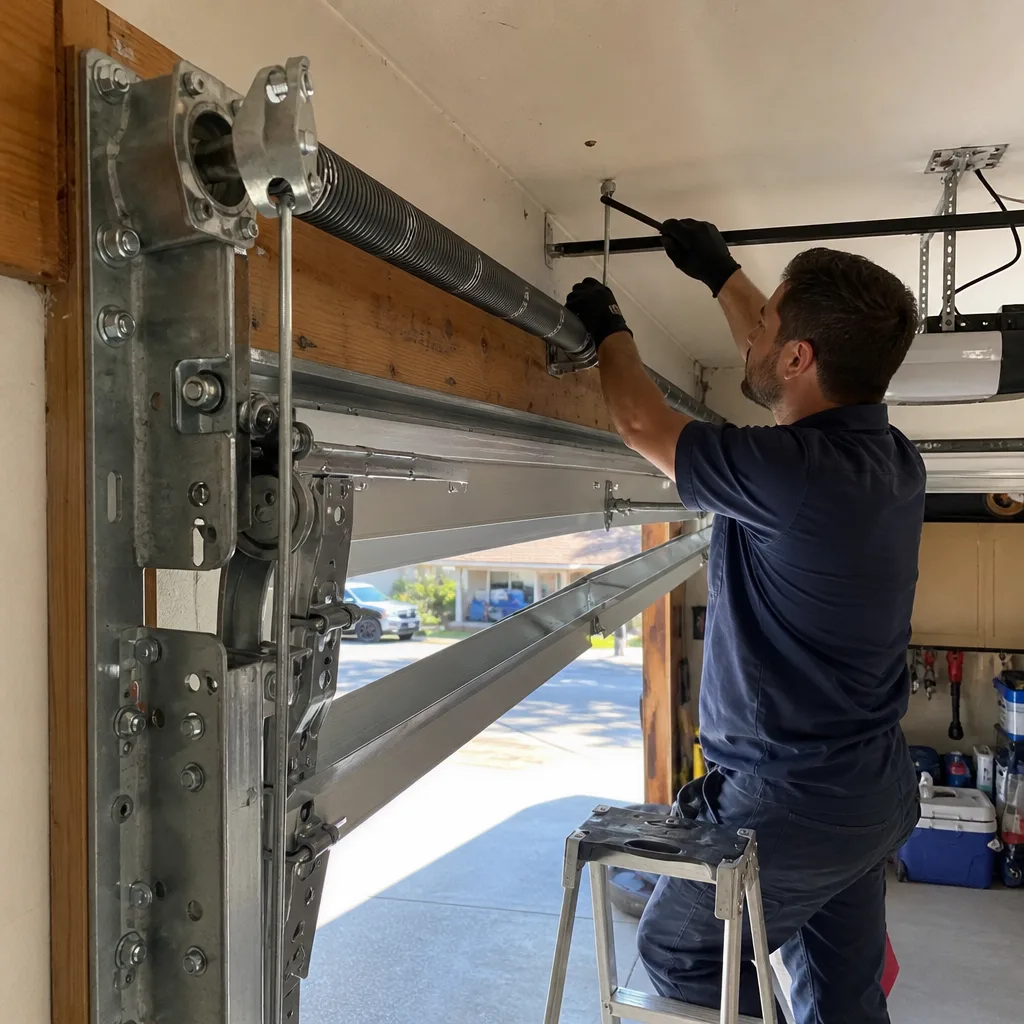
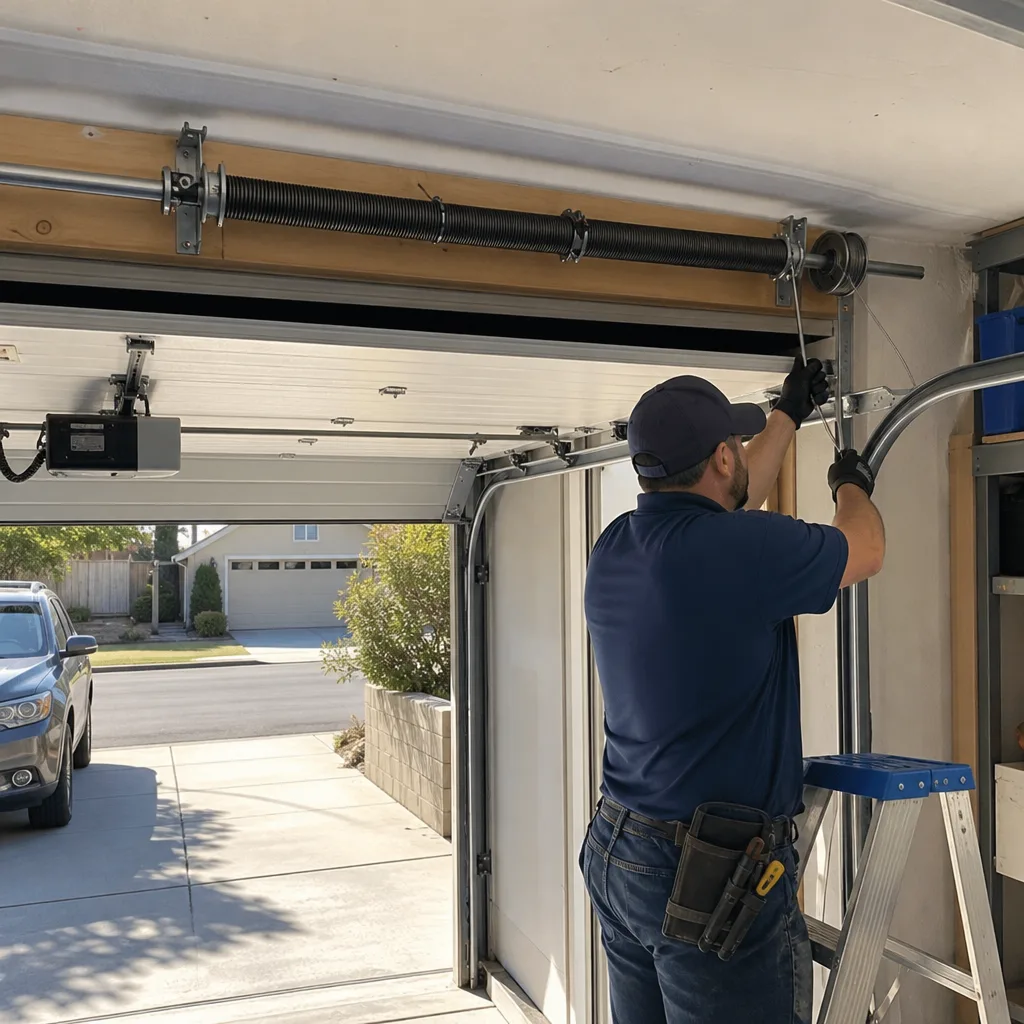
Any visible coil gap on a torsion spring, any frayed cable strand, any door that won’t hold position at waist height, or any grinding noise from inside the opener housing means the next call should be to a garage door specialist, not a general handyman. Torsion spring replacement, cable replacement, drum realignment, and track re-alignment are all jobs where the failure mode involves sudden release of stored tension. A specialist who works on garage doors exclusively has the winding bars, the correct replacement parts, and the pattern recognition to see secondary issues before they turn into second service calls.
Wexford Garage Door Repair offers free estimates in Midway on all repair and opener service work. We carry springs, cables, rollers, and drive components for the major brands on our trucks, which means most repairs are completed in a single visit. Call (833) 589-9949 to schedule an inspection.
Frequently Asked Questions
Spring replacement in Midway typically runs $180 to $340 for a standard torsion spring pair, including labor, depending on spring size and cycle rating. High-cycle springs rated for 25,000 cycles cost more upfront but eliminate the repeat failure. Call (833) 589-9949 for an exact quote on your door – estimates are free and the price is agreed before any work starts.
In most cases, yes. We stock springs, cables, rollers, and opener parts for LiftMaster, Chamberlain, Genie, Clopay, Amarr, Wayne Dalton, Craftsman, and Raynor on our service vehicles, so the most common repairs in Midway are completed the same day. Call (833) 589-9949 in the morning and you’ll typically have answers and a fixed door by afternoon.
No. We quote the job before we start, based on what we see during the inspection, and we don’t add surprise charges after the fact. If we find a secondary issue during the repair, we show you what we’re seeing and get your sign-off before any additional work goes on the invoice.
Most common repair parts are on the truck. Springs in multiple sizes and cycle ratings, cables for both torsion and extension systems, rollers, hinges, brackets, and opener drive components are standard stock for us. Specialized parts for older or unusual door models may require a few days, but we’ll tell you that during the estimate, not after.
Every noise type we covered in this guide has a specific cause, and none of them self-resolve. A grinding roller is wearing the track. A popping spring is fatiguing. A grinding opener is wearing the drive gear. Each of those failures gets more expensive as it cascades, so addressing noise early is the cheapest version of the repair you’ll make either way. And in Midway, where summer heat accelerates metal fatigue, waiting until fall typically means paying for a spring, a cable, and possibly an opener you could have avoided.
Belt-drive and chain-drive openers from LiftMaster and Chamberlain typically last 10 to 15 years in Midway, while screw-drive Genie units average 8 to 12. The plastic drive gear inside the opener body is the first component to fail in our heat, and it’s replaceable on most models without replacing the entire unit. If your opener is older than a decade and developing hesitation, a Garage Door Repair in Midway technician can diagnose whether it’s the opener or the door balance before you spend on a replacement.
The Bottom Line
Your garage door tells you when it’s failing. A half-second hesitation at startup, a gap between spring coils, grinding that follows the door’s travel, cable dust on the track, a roller that skids in the flashlight beam – these are the early warnings that separate a $200 spring replacement from a $700 multi-component repair. The door cycles hundreds of times a year in Midway’s climate, and the components are wear items with predictable lifespans. Learn the sounds, learn the visual cues, and run the ten-second roller test once a season. When a warning sign shows up, call (833) 589-9949. We’ll quote the fix before we start, and on most days, we’ll have your door running right by the time you get home. Start with the Wexford Garage Door Repair home page to see our full service range in Midway.
Written by the team at Wexford Garage Door Repair, serving Midway since 2017.
See the difference
 Before
 After
 Before
 After
 Before
 After